Braids never go out of style because they are pretty, practical and flexible. A braid can keep hair out of your face on a busy morning, turn an outfit into something special, or carry you from the office to a wedding without a touch-up. The best part is that you do not need salon skills to start. With a brush, a few hair ties and ten minutes of practice, most of these styles are within reach, even for beginners. This guide covers eleven beautiful braided hairstyles for women, from the classic three-strand braid to box braids and elegant crown braids.
Quick Answer
If you want one braid to learn first, start with the classic three-strand braid. It takes five minutes, suits every hair length from shoulder to waist, and is the base for almost every other braided style. Once you can do it without looking in a mirror, the French braid is the natural next step, because it uses the same three-strand movement while adding hair from the sides. For a special occasion, a crown braid or a waterfall braid gives the most elegant result with the least effort. For a style that lasts weeks instead of hours, box braids are the best choice, though they take longer to install. Whatever you choose, start with clean, detangled hair, keep a few clear elastics and bobby pins nearby, and practise on slightly damp hair if your hair is slippery, because damp hair grips better and holds a braid longer.
Key Takeaways
- The classic three-strand braid is the easiest starting point and the base for most other braids.
- French and Dutch braids look similar, but the French braid tucks under while the Dutch braid stands out on top.
- Fishtail and waterfall braids look delicate but only need patience, not advanced skill.
- Box braids last for weeks and protect natural hair, but need regular scalp care.
- Crown, halo and braided bun styles are the best choices for weddings and formal events.
- A light hairspray or a little styling cream keeps any braid neat for the whole day.
Table of Contents
- Classic Three-Strand Braid
- French Braid
- Dutch Braid
- Fishtail Braid
- Box Braids
- Crown Braid
- Waterfall Braid
- Halo Braid
- Braided Ponytail
- Side Braid
- Braided Bun
- FAQs
- Final Thought
Classic Three-Strand Braid
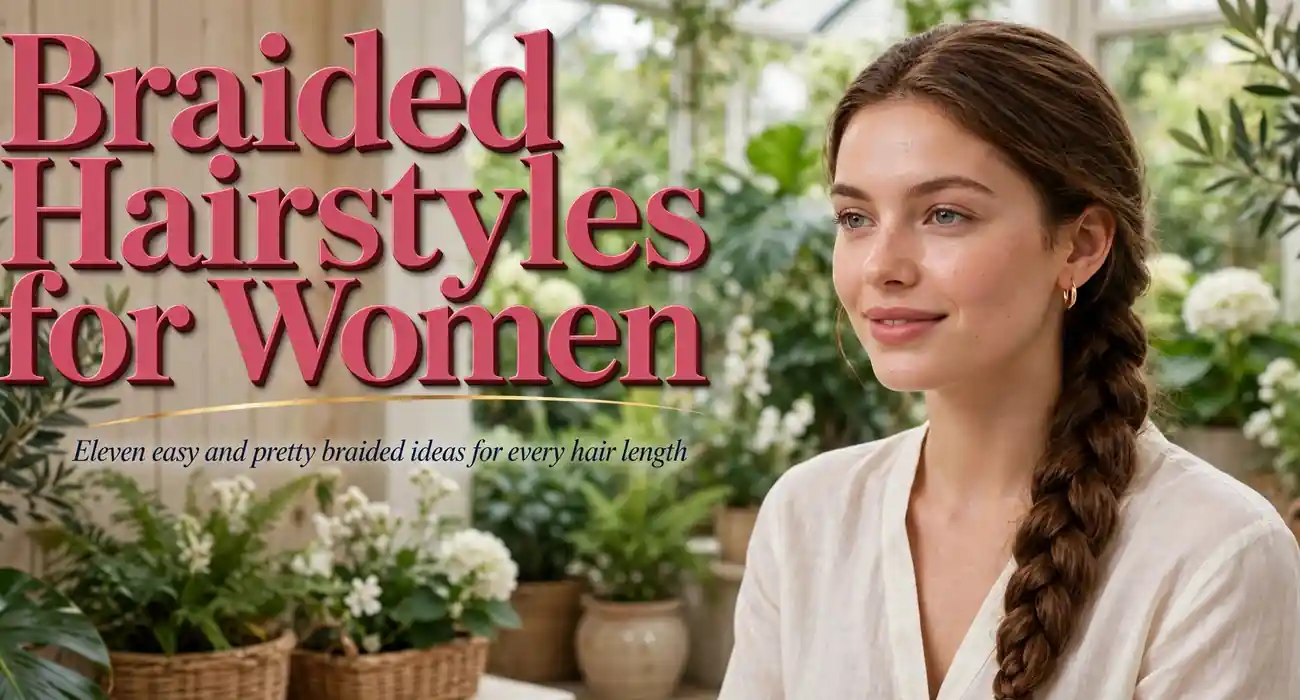
The classic three-strand braid is the foundation of all braiding, and it is the style most of us learned first. It works on straight, wavy and curly hair, and it suits every face shape because it pulls the hair back cleanly without looking severe. Start by brushing your hair until it is completely smooth, then gather it at the nape of your neck or over one shoulder. Divide it into three equal sections. Cross the right section over the middle one, then cross the left section over the new middle one, and keep repeating until you reach the ends. Tie the braid with a small elastic, and you are done.
The secret to a beautiful classic braid is even sections. If one section is thicker than the others, the braid will twist to one side and look uneven. Take a moment at the start to divide the hair carefully, and the rest will follow naturally. For a softer look, gently pull the edges of the finished braid outward with your fingertips. This technique, often called pancaking, makes the braid look fuller and more relaxed, which suits casual days and summer outfits.
This braid is also the most practical everyday style. It keeps long hair from tangling in the wind, stops it falling into your face while you work, and survives a full day without needing a touch-up.
Tip: Brush your hair smooth first, and braid slightly loose for a soft, full look.
French Braid
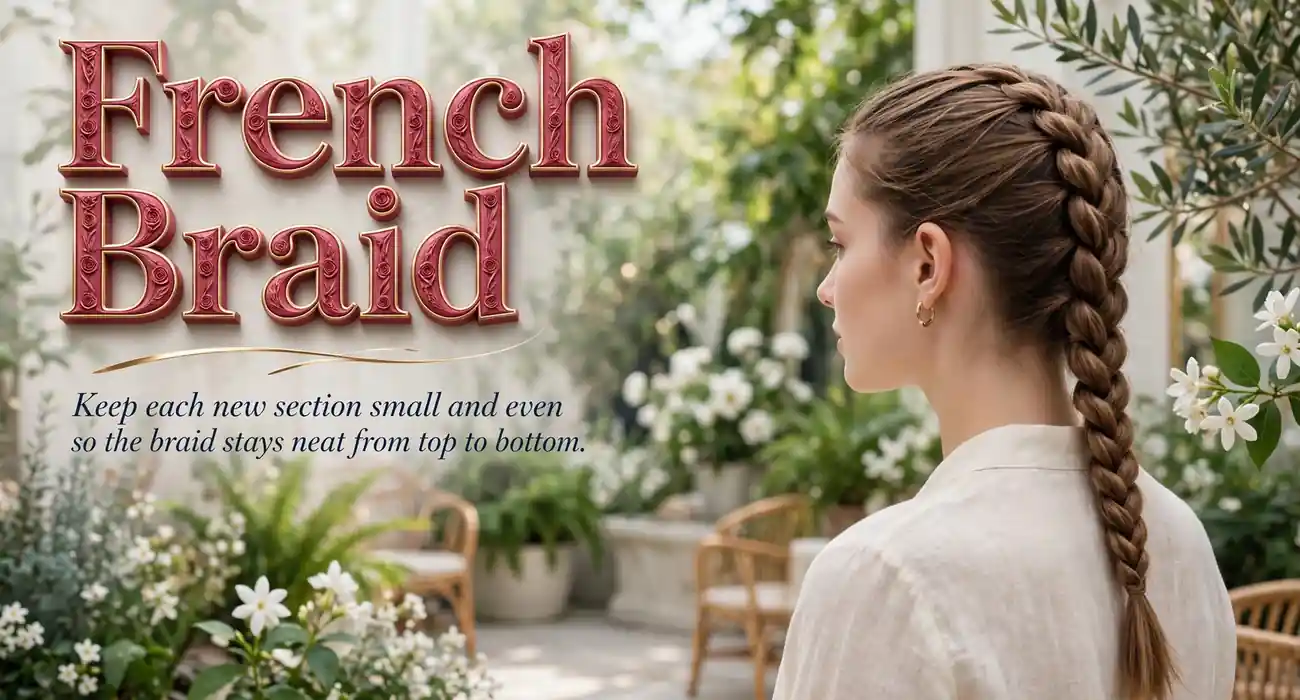
The French braid is the most loved braided style in the world, and for good reason. It gathers all the hair into one neat braid that sits flat against the head, so it looks polished from every angle and stays in place for hours. It suits work, school, weddings and workouts equally well, which makes it one of the most useful styles you can learn.
Start with a small section of hair at the front of your head, near the hairline, and divide it into three strands. Begin a normal three-strand braid, but each time you cross a strand over the middle, pick up a small new section of loose hair from that side and add it to the strand before crossing. Work your way down the back of your head, adding hair evenly from both sides, until you reach the nape of your neck. Then finish with a normal three-strand braid to the ends and tie it off.
The key is to keep the added sections small and even. Large, uneven sections make the braid look lumpy, while small sections give a smooth, professional finish. If your hair is freshly washed and slippery, braid it slightly damp or add a little styling cream first, because grip makes all the difference. Practise on yourself a few times and it will soon become muscle memory.
Tip: Keep each new section small and even so the braid stays neat from top to bottom.
Dutch Braid
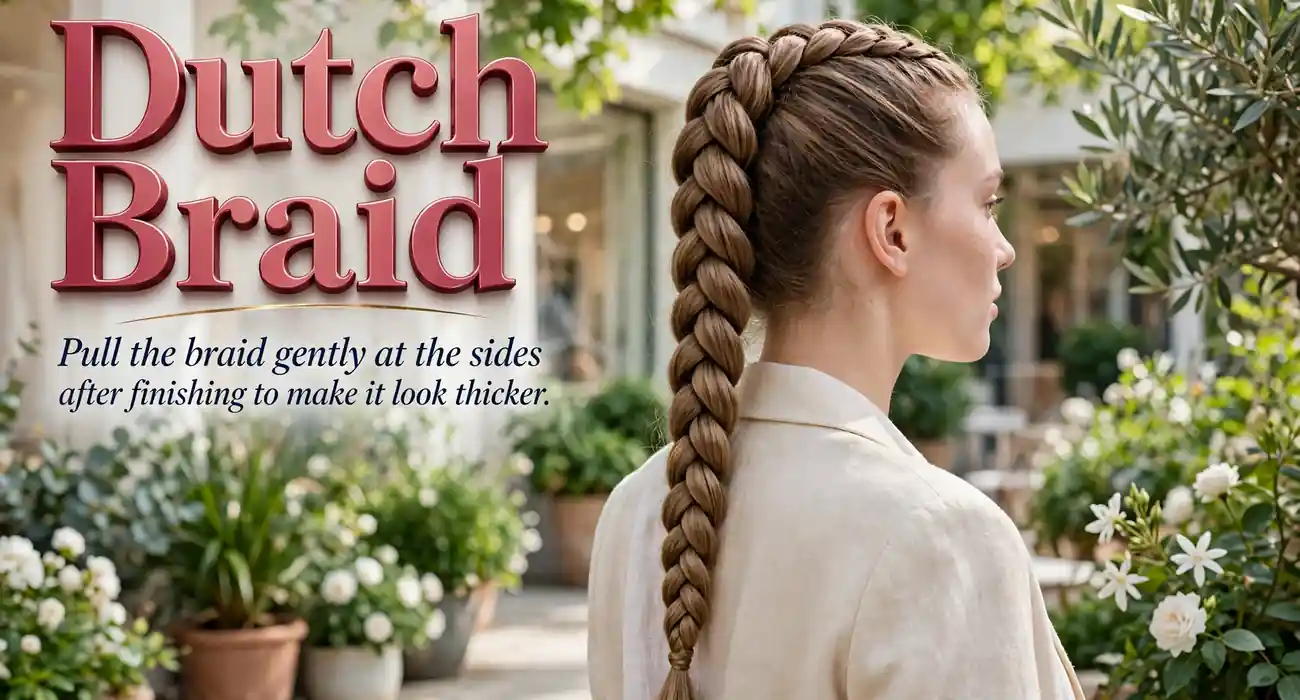
The Dutch braid is often called the reverse French braid, and it gives a bold, three-dimensional look that stands out beautifully. Where the French braid sits flat and smooth, the Dutch braid pops out from the head like a rope, which makes it a favourite for photos, festivals and statement looks. It uses exactly the same steps as a French braid, with one simple change: instead of crossing each strand over the middle, you cross it under the middle. That small change is what pushes the braid outward.
Begin at the front hairline with three small sections, then cross the right strand under the middle, and the left strand under the new middle, adding a little loose hair to each strand before you cross it under. Keep working down the head in a straight line, and finish with a normal braid at the ends.
Dutch braids also hold better than French braids on thick hair, because the under-crossing locks each section in place. They are the best choice for long days, dancing, and windy weather. To make the braid look even fuller, gently pull the outer edges after you finish, working from the bottom upward so the braid stays even.
Tip: Pull the braid gently at the sides after finishing to make it look thicker.
Fishtail Braid
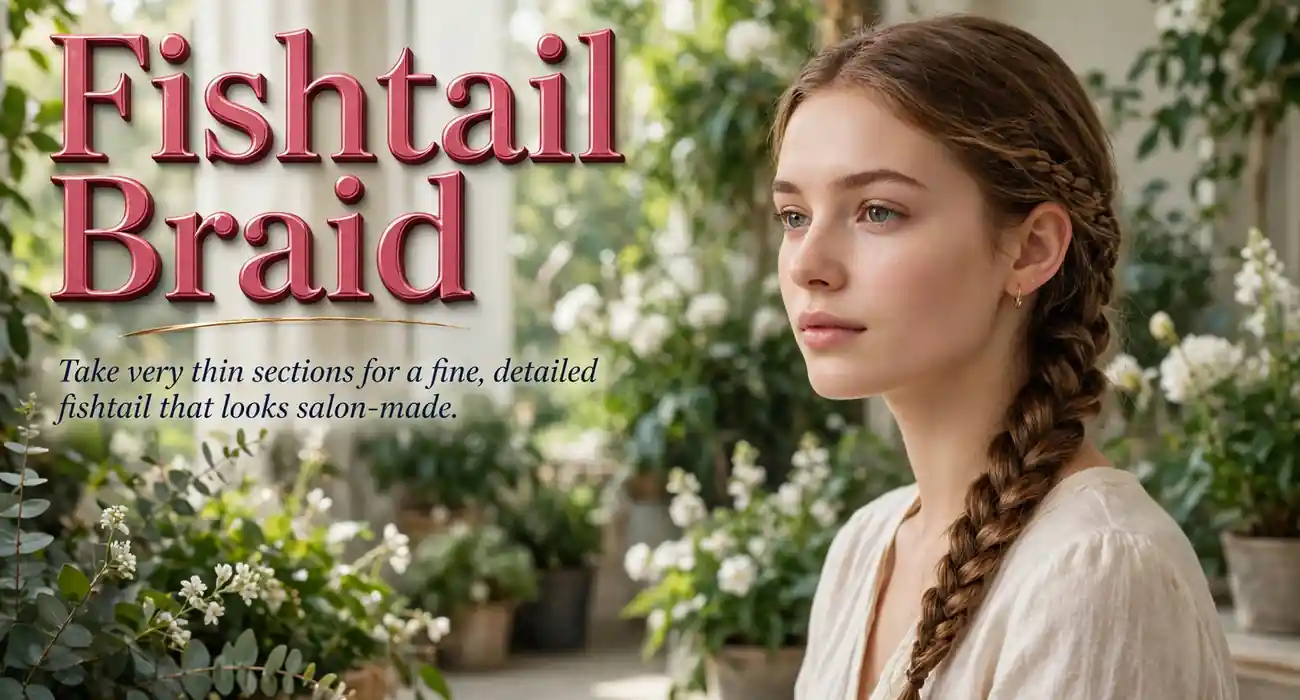
The fishtail braid looks delicate and detailed, almost like a woven pattern, but it is surprisingly simple once you know the trick. Instead of three sections, it uses only two, and the fine, criss-cross texture makes it look far more difficult than it really is. It is a lovely choice for weddings, parties and romantic evenings, and it photographs beautifully because the pattern catches the light.
Divide your hair into two equal halves. Take a thin strand from the outside of the right half and cross it over to join the inside of the left half. Then take a thin strand from the outside of the left half and cross it over to join the inside of the right half. Keep repeating, always taking from the outside and crossing to the inside, until you reach the ends, then tie it off. The thinner the strands you take, the finer and more detailed the fishtail will look, though it will take a little longer.
Fishtail braids work best on long hair, because the pattern needs length to show properly, but a side fishtail also looks lovely on shoulder-length hair. For a softer, bohemian finish, pull the braid gently at the edges and let a few face-framing strands fall loose around your cheeks.
Tip: Take very thin sections for a fine, detailed fishtail that looks salon-made.
Box Braids
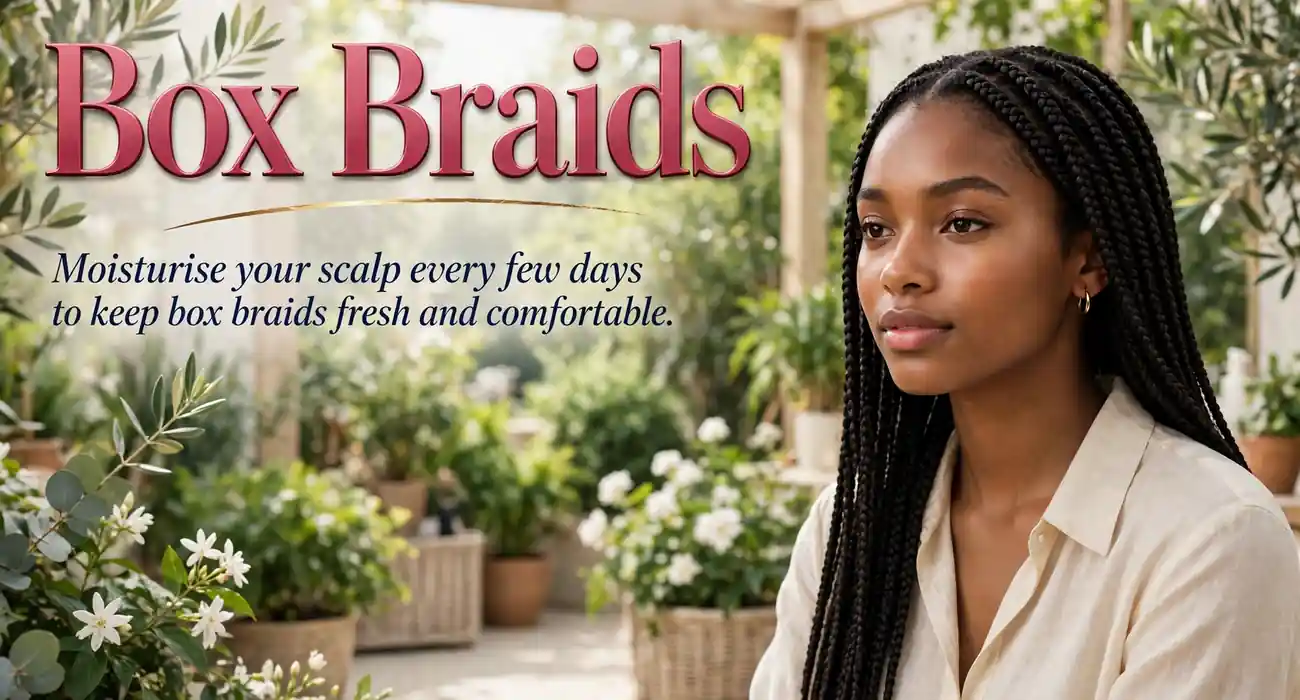
Box braids are a protective style made from many small, square-sectioned braids that hang freely, and they are loved because they last for weeks and give natural hair a rest from daily styling. Each braid is usually made with added hair extensions, which means you can choose the length, thickness and colour you want.
Because box braids take several hours to install, most people have them done by a professional braider. The hair is parted into neat squares, and each square is braided from the root to the ends with the extension hair added in. The result is a full head of even, long-lasting braids that need very little daily work.
Care matters more than styling with box braids. Wash your scalp gently every week or two with diluted shampoo, and moisturise your scalp with a light oil every few days so it does not dry out. Do not leave box braids in for more than six to eight weeks, and give your hair a break between installs. When they are removed carefully, your natural hair underneath is protected and healthy. Box braids are a commitment, but for many women they are the easiest hair routine of all.
Tip: Moisturise your scalp every few days to keep box braids fresh and comfortable.
Crown Braid
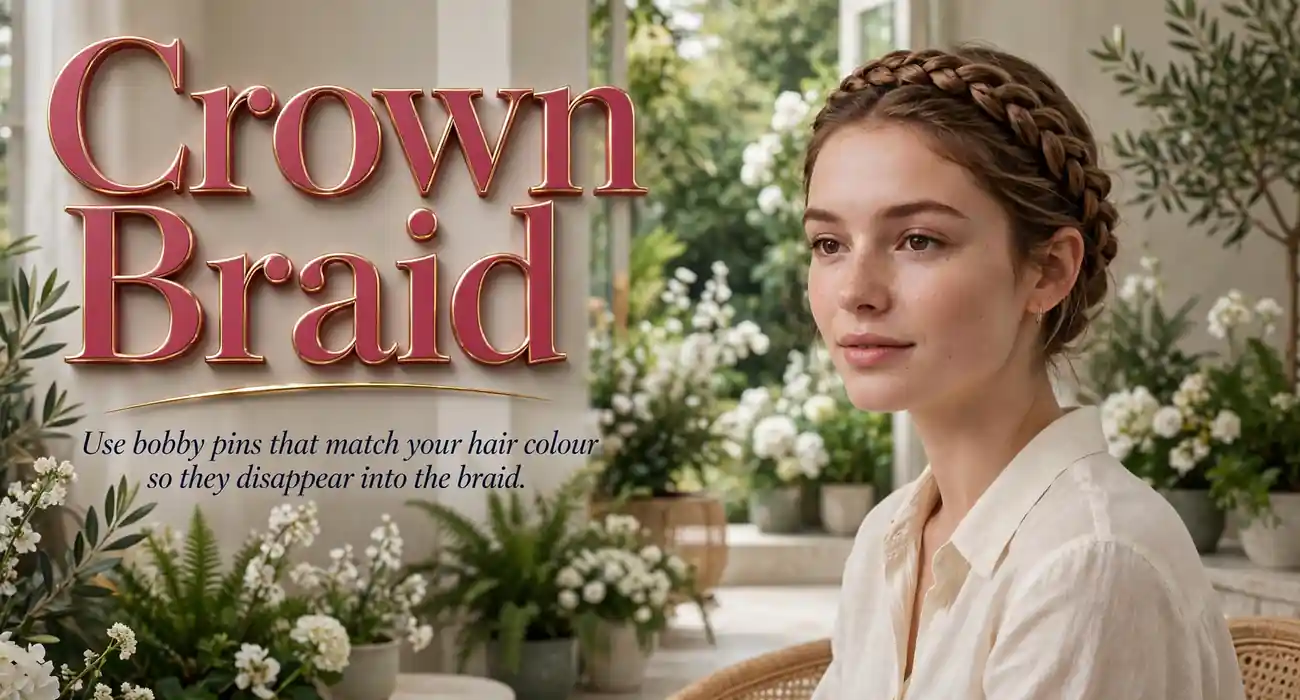
The crown braid wraps around the head like a halo, and it is one of the most elegant braided styles you can wear. It looks like something from a fairytale, which makes it a favourite for weddings, proms, festivals and summer garden parties.
To make a crown braid, start behind one ear and French braid or Dutch braid around the head, following the hairline, adding hair as you go. Work your way around the front, over the other ear and around the back, until you meet the starting point. Tuck the end of the braid under the start and pin it securely with bobby pins. The braid should sit like a band across the forehead and around the head. If you prefer a softer look, leave a few loose strands around the face and curl them lightly.
This style works best on medium to long hair, and it suits oval, round and heart-shaped faces particularly well. The key is to keep the braid close to the head and to pin it well, because a crown braid that slips looks messy fast. Take your time with the pins, and the style will hold all day.
Tip: Use bobby pins that match your hair colour so they disappear into the braid.
Waterfall Braid
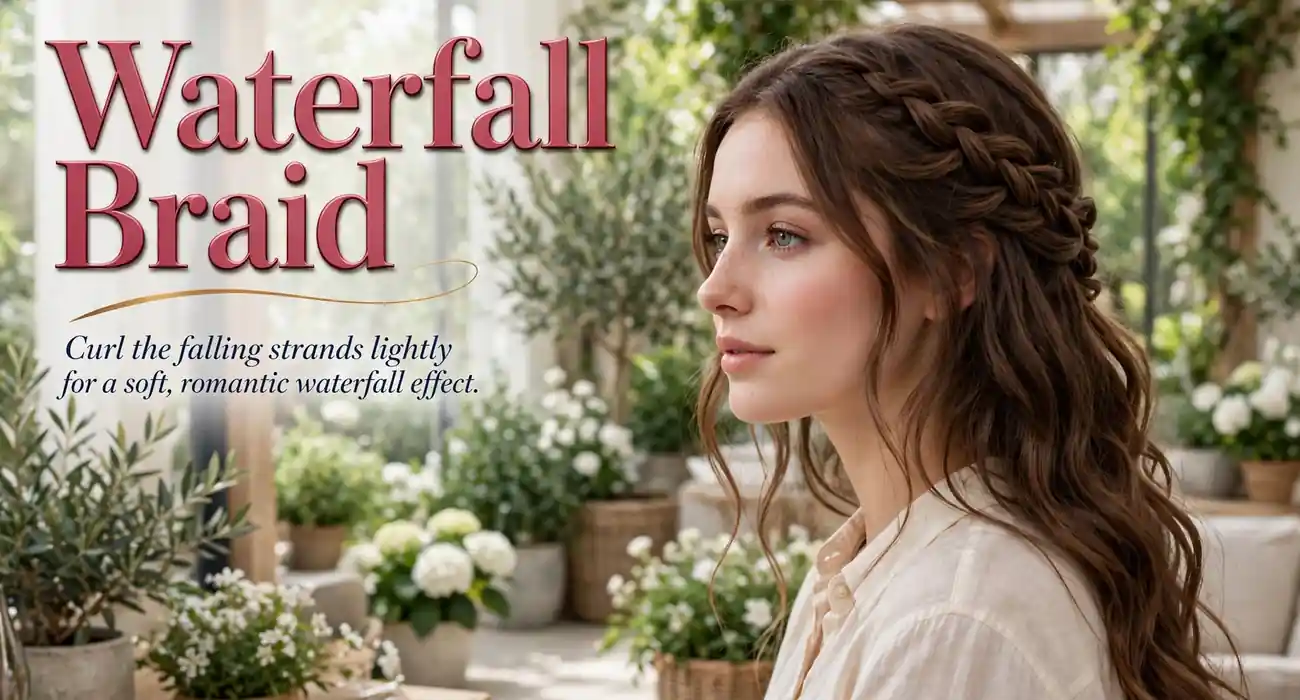
The waterfall braid is one of the prettiest braided styles, because it lets strands of hair fall through the braid like water over a ledge. Half the hair stays loose and flowing while the braid itself runs across the head, which gives a soft, romantic look that is perfect for dates, parties and photographs. It looks complicated, but it follows the same rhythm as a French braid, with one extra step.
Start near one temple with three small sections and begin a French braid. Each time you cross the top strand over, drop it and let it fall down with the rest of your loose hair, then pick up a fresh section of hair from just behind it to replace it. Keep going across the back of your head, always dropping the top strand and replacing it, until you reach the other side. Tie the end with a small elastic and hide it under the loose hair.
The waterfall braid looks best on long, wavy hair, because the falling strands show the pattern clearly. If your hair is straight, curl the ends lightly first so the falling strands have movement.
Tip: Curl the falling strands lightly for a soft, romantic waterfall effect.
Halo Braid
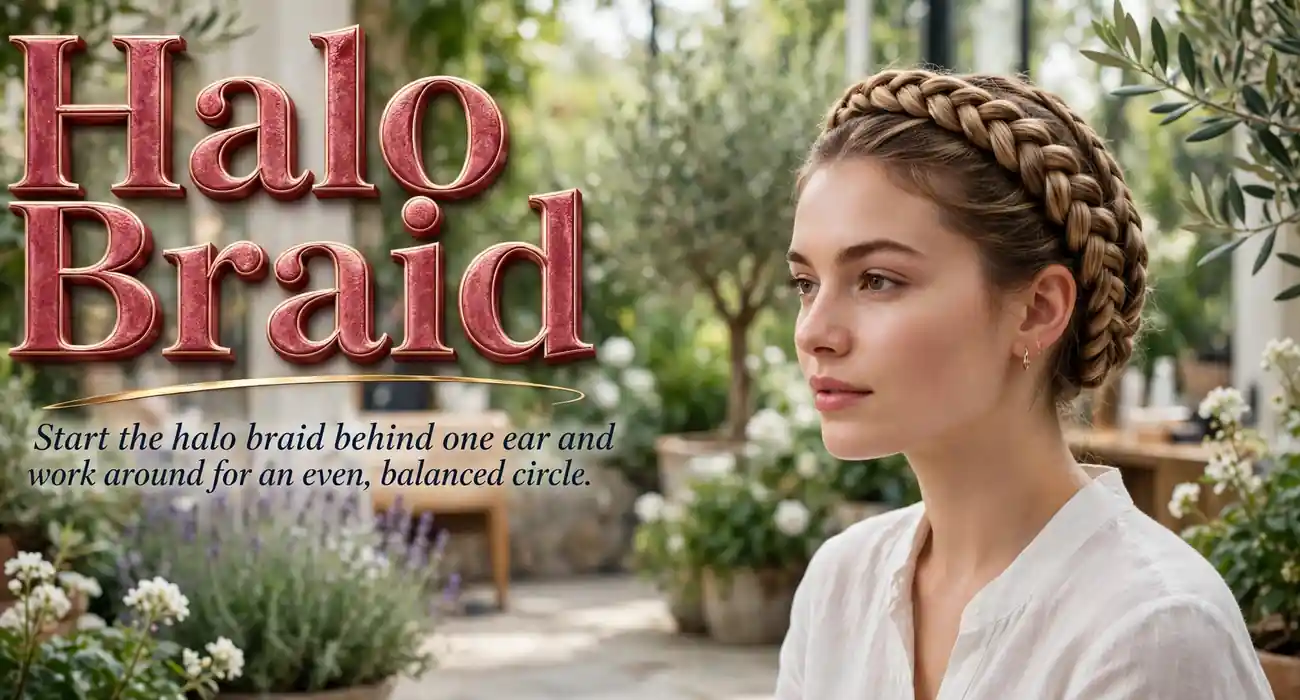
The halo braid circles the whole head in one continuous ring, and it is the most striking of all the braided styles. Unlike a crown braid, which usually sits like a band across the front, a halo braid wraps fully around the head, framing the face from every side. It is a show-stopping choice for weddings, formal events and photoshoots, and it makes even a simple dress look special.
Start behind one ear and braid around the head in a full circle, adding hair as you go, exactly like a French braid that never stops. Keep the braid even and close to the scalp, working slowly around the back of the head and back to your starting point. When you reach the start, tuck the tail under the beginning of the braid and pin it firmly in place. The result should be one smooth, unbroken ring of braid.
This style needs medium to long hair and a little patience, but the result is worth it. For a wedding, small white flowers or pearl pins woven into the braid look beautiful.
Tip: Start the halo braid behind one ear and work around for an even, balanced circle.
Braided Ponytail
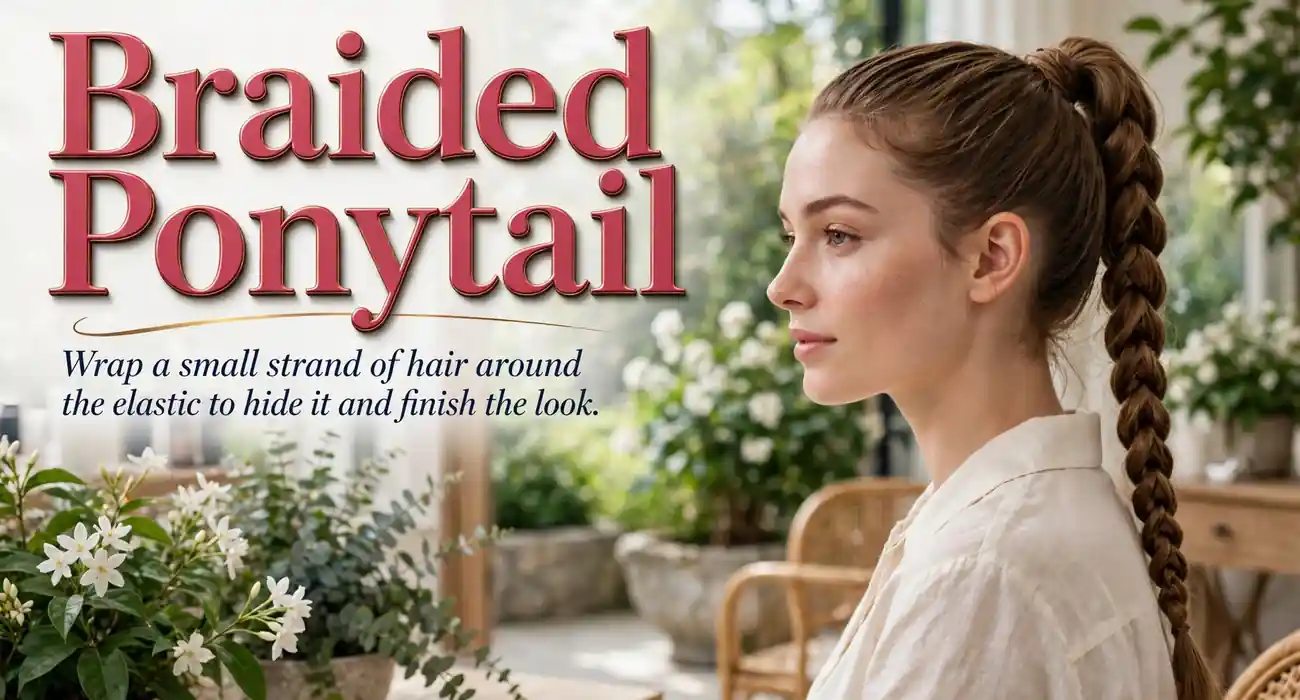
The braided ponytail is the perfect mix of sporty and pretty. It starts as a normal high or low ponytail, then the length is braided, which keeps the hair tidy, stops tangles, and adds a stylish detail to an otherwise simple look. It is ideal for the gym, for running errands, for work, and for any day when you want your hair completely out of the way without looking plain.
Tie your hair into a ponytail at the height you like, high for a bold look or low for something softer. Then divide the ponytail into three sections and braid it to the ends, tying it off with a small elastic. For a more polished finish, take a thin strand from underneath the ponytail and wrap it around the elastic, pinning it in place so the elastic disappears.
This style works on every hair length from shoulder to waist, and it is one of the fastest braided styles to do, taking less than five minutes once you know it. For a thicker-looking braid, gently pull the edges of the braid after tying it off, and finish with a light mist of hairspray.
Tip: Wrap a small strand of hair around the elastic to hide it and finish the look.
Side Braid
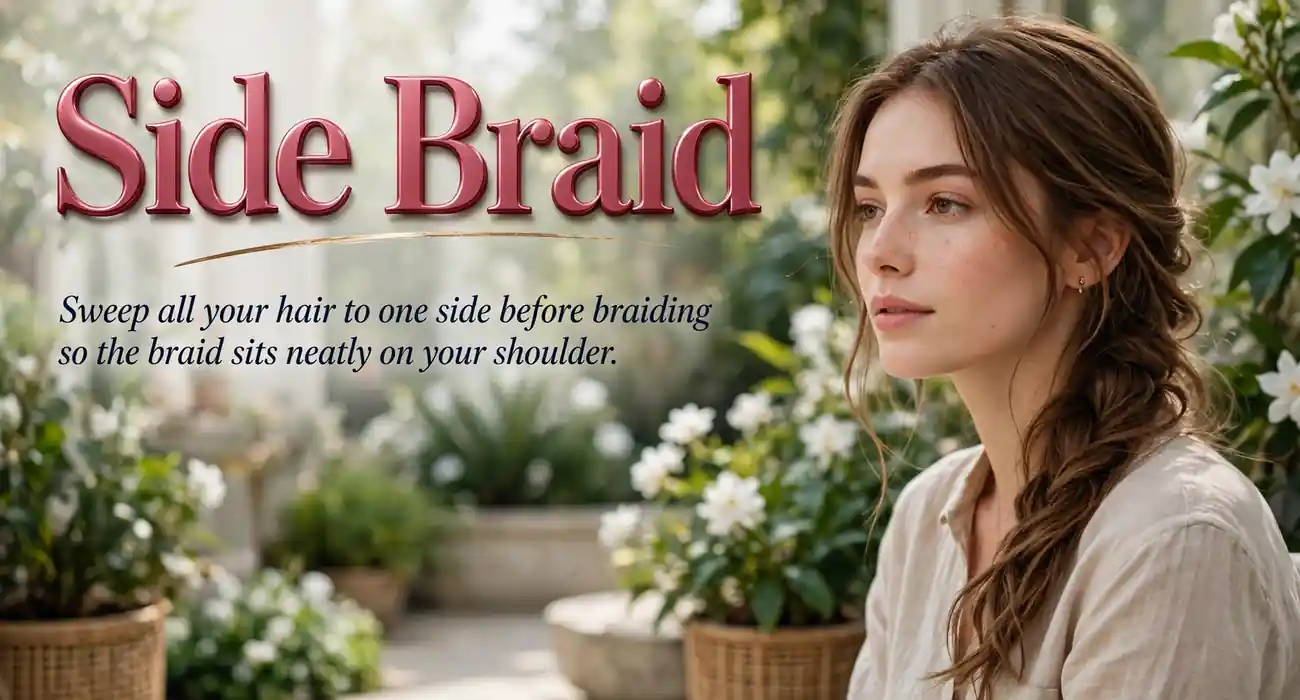
The side braid is a soft, romantic style that sweeps all the hair over one shoulder and braids it loosely down the front. It is one of the easiest braids to do on yourself, because you can see what you are doing, and it suits almost every occasion, from a casual lunch to an evening out.
Sweep all your hair to one side, over your chosen shoulder, and divide it into three sections. Braid normally down the length, keeping the braid loose and relaxed rather than tight. Tie it at the ends with a small elastic, then gently pull the edges of the braid to make it look fuller. Let a few strands fall loose around your face for a soft, effortless finish.
This style is perfect for second-day hair, because slightly lived-in hair grips better and holds the braid longer. It also works well on layered hair, since the short layers stay inside the braid when it sits to the side. For a special occasion, add a ribbon at the end or a small flower above the ear, and the simple side braid becomes an evening look.
Tip: Sweep all your hair to one side before braiding so the braid sits neatly on your shoulder.
Braided Bun
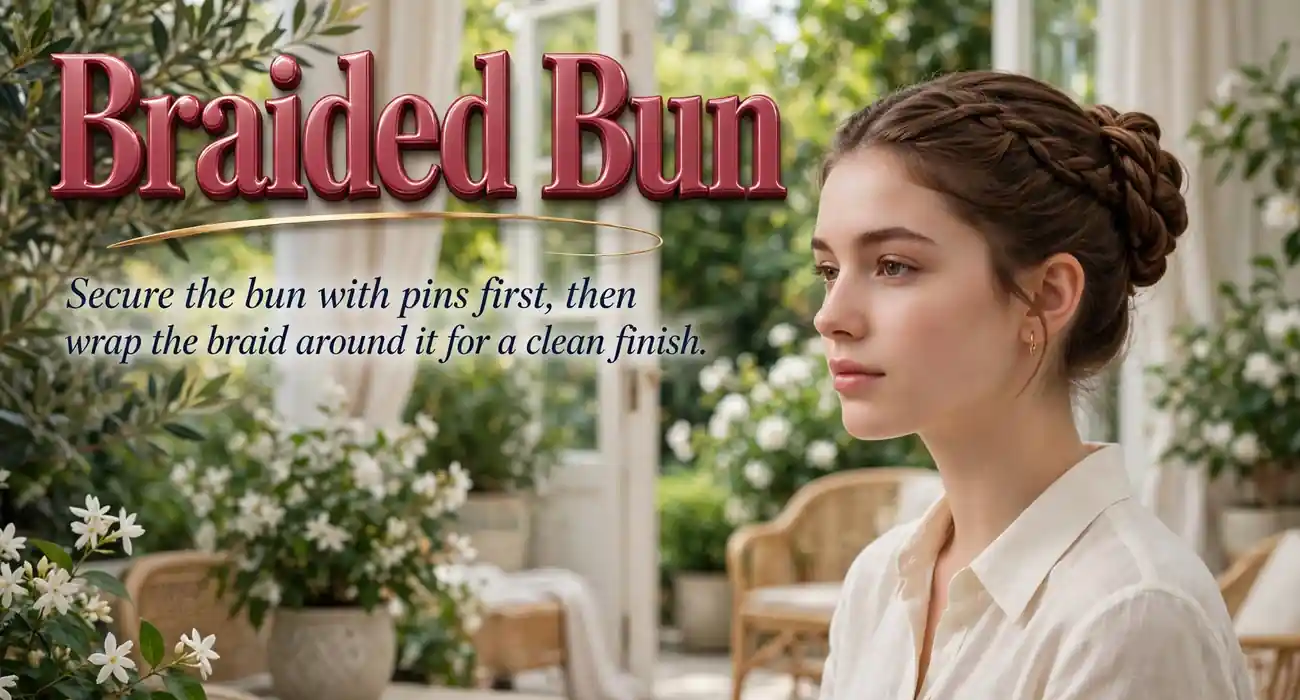
The braided bun is a neat, elegant updo that combines a braid with a classic bun, and it is one of the best styles for formal events, work, and hot weather. It keeps every strand off your face and neck, it never comes loose, and it looks far more polished than a plain bun.
There are two easy ways to make it. For the first, braid your hair into a single braid, then coil the braid around its own base and pin it into a bun shape. For the second, tie your hair into a high ponytail, divide the ponytail into two or three braids, then twist and pin the braids together into a bun. Both methods give a beautiful, textured bun with a braided pattern running through it. Pin generously, using bobby pins that match your hair colour, and check the bun from all sides before you finish.
This style works best on medium to long hair, and it suits oval and long faces particularly well. For a sleek, formal finish, smooth the hair back with a little gel before you start, and keep the bun tight and high. A braided bun lasts all day without a touch-up, which is why it is a favourite for long events.
Tip: Secure the bun with pins first, then wrap the braid around it for a clean finish.
FAQs
Which braided hairstyle is easiest for beginners?
The classic three-strand braid is the easiest by far. It only uses three sections and one repeated movement, it takes five minutes, and it is the base for every other braid. Once you can do it without a mirror, try a French braid next.
How long do box braids last?
Box braids usually last four to eight weeks with good care. Wash the scalp gently every week or two, moisturise it every few days, and do not keep them in longer than eight weeks, because the new growth can tangle at the roots.
Can I braid short hair?
Yes, you can braid hair as short as chin length, though the styles are more limited. A side braid, a small crown braid, or two small French braids at the front all work well on short hair, and adding a little styling cream helps the short pieces grip.
Do braids damage hair?
Braids do not damage hair when they are done gently and not worn too tight. The risk comes from braids that pull at the scalp or are left in for too long. Keep braids comfortable, never painful, and give your hair a break between protective styles.
How do I keep my braid neat all day?
Start with detangled hair, braid on slightly damp hair or with a little styling cream for grip, and finish with a light hairspray. Keep a few bobby pins in your bag for loose pieces, and avoid touching the braid during the day.
What is the difference between a French braid and a Dutch braid?
Both add hair from the sides as you braid down the head, but a French braid crosses each strand over the middle so it sits flat, while a Dutch braid crosses each strand under the middle so it stands out like a rope.
Which braid is best for thick hair?
Dutch braids and box braids are the best choices for thick hair, because they hold firmly and show off the volume. A classic three-strand braid also works well, but keep it loose so it does not feel heavy.
Can I wear braids to a wedding?
Yes, braids are a beautiful wedding choice. A crown braid, halo braid or waterfall braid looks elegant with a dress, and a braided bun holds a veil perfectly. Add flowers or pearl pins for a special touch.
How do I stop my braid from frizzing?
Braid on slightly damp hair, use a small amount of styling cream or serum before you start, and finish with a light hairspray. If your hair is very frizzy, braid it the night before and sleep on a silk pillowcase.
How often should I wash braided hair?
For everyday braids, wash your hair as normal before braiding, and re-braid every one to three days. For box braids, wash the scalp gently every one to two weeks with diluted shampoo, and rinse well so no product builds up.
Related: winter party outfits and shearling jackets for women
Final Thought
Braids are one of the simplest ways to look put together, and they never ask for much. A brush, a few elastics and ten minutes are enough to turn an ordinary hair day into something pretty. Start with the classic three-strand braid, learn one new style each week, and soon you will have a whole collection of looks for work, parties, weddings and lazy Sundays. The best braid is the one you enjoy wearing, so try them all, find your favourites, and make them your own.

Shahid Imran is the founder of InfoPrimeX, where he writes about AI tools, technology, gadgets, apps, travel, and digital trends. His mission is to provide practical, easy-to-understand information that helps readers learn smarter, explore better, and stay ahead.
Website: infoprimex.com