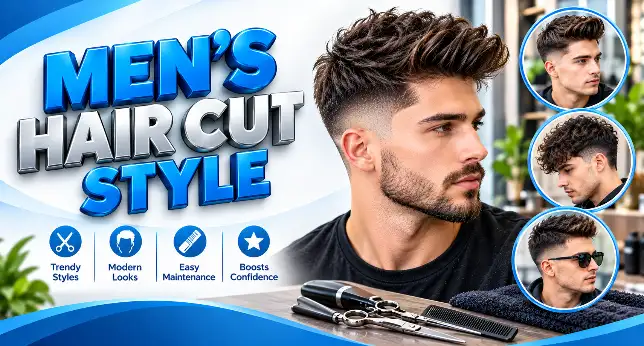
Choosing a men’s hair cut style is easier when you stop looking at the haircut name alone. A photo may look great on one person but feel completely different on someone with another hair texture, face shape, hairline, or daily routine.
The good news is that men’s haircut choices are more flexible than ever. Current 2026 grooming coverage includes textured crops, low tapers, fades, classic short cuts, longer layered styles, curtains, modern mullets, and refreshed versions of traditional cuts.
What Is a Men’s Hair Cut Style?
A men’s haircut style is the overall shape, length, texture, and finishing method used to cut and arrange men’s hair.
A haircut can be defined by several details:
- Length: short, medium, or long
- Sides: tapered, faded, shaved, or left longer
- Top: cropped, layered, swept back, parted, or textured
- Front: fringe, quiff, pompadour, or natural hairline
- Texture: smooth, messy, wavy, curly, or heavily textured
- Finish: matte, natural, polished, or glossy
This is why simply telling a barber “give me a fade” may not be enough. A fade describes the sides, not the entire haircut.
Men’s Hair Cut Styles to Consider in 2026
Rather than choosing a haircut only because it is trending, think about how the style fits your own hair and routine.
1. Low Taper Fade
A low taper gradually reduces the hair around the sideburns and neckline while keeping more length higher on the sides.
It is useful when you want a clean appearance without the strong contrast of a high fade.
Consider it if you want:
- A polished everyday cut
- Moderate maintenance
- More natural-looking sides
- Flexibility with different top styles
Taper and fade terminology can vary slightly between barbers, so showing a photo helps communicate the exact result you want.
2. Mid Fade
A mid fade begins higher than a low fade and creates more visible contrast between the sides and the top.
It can work with many tops, including textured crops, curls, quiffs, and short styles.
Best for: someone who wants a noticeable fade without taking the sides extremely high.
3. High Fade
A high fade starts farther up the sides, creating a stronger separation between the short sides and longer top.
It gives a sharper appearance but can require more frequent maintenance if you want the fade to remain crisp.
4. Skin Fade
A skin fade takes the shortest part of the fade down to the skin.
The result is a strong, clean contrast.
It can be combined with many top styles, but the sharpness of the fade means regrowth can become noticeable relatively quickly.
5. Textured Crop
The textured crop keeps the top relatively short while using layers and texture to create movement.
A short fringe often sits toward the forehead.
This style has remained prominent in men’s grooming coverage because the basic shape can be adjusted through the fade level, top length, and texture.
Good choice for: men who want a short style with more character than a uniform cut.
6. French Crop
The French crop is characterized by a short top and a forward fringe.
The sides may be tapered or faded.
The important feature is the direction of the front hair: it falls forward rather than being swept backward.
7. Crew Cut
The crew cut keeps the hair short and structured, usually with a little more length toward the front or top.
It is practical for men who want a neat haircut without spending much time styling.
8. Buzz Cut
A buzz cut uses very short, closely clipped hair.
Because the hair is short and relatively uniform, morning styling is minimal.
The trade-off is that the cut leaves little room to disguise differences in head shape, hairline, or uneven growth.
9. Classic Side Part
The side part creates a defined parting with the hair directed toward one side.
It can look polished without being overly formal.
You can pair it with tapered sides for a traditional appearance or a more modern fade for additional contrast.
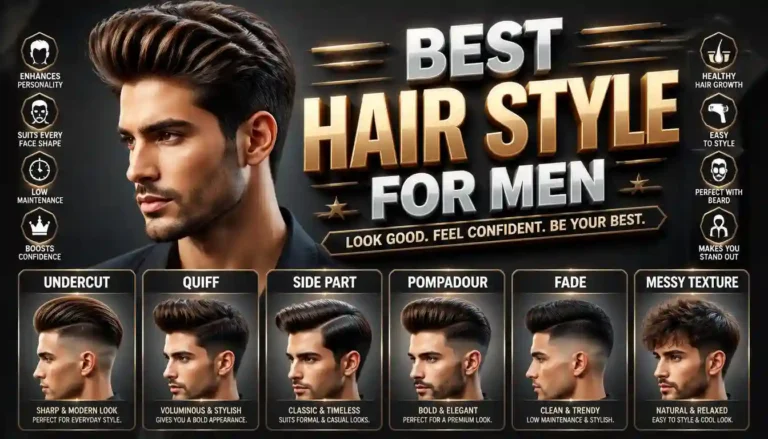
10. Quiff
A quiff adds lift at the front while allowing the rest of the hair to remain relatively relaxed.
Compared with a pompadour, the quiff can be less structured and more casual.
It works especially well for men who enjoy styling their hair for a few minutes each morning.
11. Pompadour
The pompadour is built around height and volume at the front, with the hair swept upward and backward.
Modern versions can be softer and less rigid than traditional interpretations.
A pompadour generally requires more styling effort than a crop or buzz cut.
12. Slick Back
The slick back directs the top backward from the forehead.
It can be worn with a taper, fade, or longer sides depending on the desired appearance.
Hair length and natural texture matter because very short hair may not stay directed backward easily.
13. Curtains
Curtain hair creates a center or slightly off-center part, allowing the front sections to fall toward either side of the face.
It is particularly useful for medium-length hair.
The result can range from neat and structured to relaxed and naturally textured.
14. Undercut
An undercut creates a stronger disconnect between the longer top and much shorter sides.
Unlike a gradual fade, the transition can be deliberately less blended.
It suits men who want a more defined contrast between the top and sides.
15. Modern Mullet
The modern mullet keeps shorter or more controlled hair around the front and sides while leaving deliberate length toward the back.
Modern versions can be subtle rather than extreme.
Current men’s grooming coverage continues to feature modern mullet variations alongside textured and layered styles.
16. Wolf Cut
A wolf cut combines layers, texture, and a deliberately lived-in shape.
It is more suitable for men who are comfortable with medium or longer hair and a less structured finish.
17. Bro Flow
The bro flow is a medium-to-long hairstyle that allows the hair to move naturally backward and away from the face.
It can work particularly well when the hair already has natural wave or movement.
18. Caesar Cut
The Caesar keeps the hair short with a compact forward fringe.
It is structured, simple, and easy to maintain.
19. Ivy League
The Ivy League is a slightly longer variation of a crew-style haircut.
It gives you enough length to part or style the top while maintaining relatively short sides.
20. Layered Medium Cut
Medium-length layers allow natural movement without committing to a very long hairstyle.
This can be useful for thick or wavy hair when the goal is to remove bulk while preserving length.
21. Curly Fade
A curly fade keeps the sides controlled while allowing the curls on top to remain visible.
The key is not simply the fade level. Your barber also needs to understand how your curls shrink, expand, and sit after drying.
22. Short Curly Crop
A short curly crop keeps curls relatively close to the head while using shape and texture to prevent the style from appearing bulky.
It can be a practical option when you want to keep curly hair short without removing its natural character.
23. Textured Fringe
A textured fringe keeps visible length at the front while adding separation and movement.
It can be customized with a taper or fade.
24. Long Layered Haircut
Long layers allow men to keep significant length while giving the hair shape.
This option requires more attention to washing, drying, detangling, and overall hair condition than a short cut.
25. Short Back and Sides
This classic approach keeps the sides and back relatively short while leaving enough length on top to style.
It remains useful because it can be adapted into a side part, textured top, quiff, or other finish.
How to Choose the Right Men’s Hair Cut Style
The haircut name should come after the practical decisions.
Start With Your Hair Type
Think about whether your hair is:
- Straight
- Wavy
- Curly
- Coily
- Fine
- Thick
- Dense
- Receding
- Prone to cowlicks
The same haircut can behave differently on different hair.
For example, a textured crop may sit naturally on one person’s straight hair but require different cutting and styling techniques on thick wavy hair.
Consider Your Hair Length
Short hair gives you less styling flexibility but often reduces daily effort.
Medium hair provides more options for:
- Side parts
- Quiffs
- Curtains
- Slick backs
- Layered styles
Long hair offers additional styling possibilities but usually requires more maintenance.
Think About Your Face Shape
Face shape can be a useful starting point, but it should not be treated as a rigid rule.
Common categories include:
- Oval
- Round
- Square
- Oblong
- Heart
- Diamond
Instead of asking whether a haircut is “allowed” for your face shape, ask what visual effect you want.
For example, adding height can change the overall appearance of a shorter or wider face, while extra width at the sides can affect the appearance of a longer face.
Your barber can adjust the proportions rather than simply copying a haircut photograph.
Which Men’s Hair Cut Style Is Low Maintenance?
If you want minimal daily styling, start with shorter cuts.
Options worth considering include:
- Buzz cut
- Crew cut
- Short crop
- Textured crop
- Short Caesar
- Short taper
- Short back and sides
Low maintenance does not mean zero maintenance.
Even a very short haircut needs regular trimming if you want to preserve its shape.
Which Haircut Works for Thick Hair?
Thick hair gives you plenty of styling possibilities, but too much bulk can make a haircut difficult to control.
Useful options can include:
- Textured crop
- Layered medium cut
- Quiff
- Side part
- Undercut
- Taper with textured top
- Curly or wavy layered styles
The barber may remove weight through layering or texturizing rather than simply cutting everything shorter.
Which Haircut Works for Thin or Fine Hair?
With fine or thinning hair, the goal is often to create a clean shape without making the hair look unnecessarily sparse.
Shorter textured styles can sometimes make fine hair easier to manage.
Possible choices include:
- Short textured crop
- Crew cut
- Caesar
- Short taper
- Buzz cut
Hair loss patterns vary considerably, so a barber should work with your actual hairline and density rather than relying on a generic recommendation.
Men’s Haircut Styles for Straight Hair
Straight hair can make clean lines and structured shapes easier to create.
Consider:
- Side part
- Slick back
- Textured crop
- French crop
- Crew cut
- Quiff
- Curtains
- Undercut
The best choice depends on whether your straight hair is fine, medium, or thick.
Men’s Haircut Styles for Wavy Hair
Wavy hair already provides movement, so a haircut can be designed around that texture.
Consider:
- Textured crop
- Medium layers
- Curtains
- Bro flow
- Quiff
- Taper with longer top
- Modern mullet
Avoid forcing naturally wavy hair into an extremely rigid shape unless you are comfortable styling it regularly.
Men’s Haircut Styles for Curly Hair
Curly hair benefits from a haircut that respects curl pattern and shrinkage.
Potential styles include:
- Curly fade
- Curly taper
- Short curly crop
- Medium curly layers
- Curly fringe
- Longer layered curls
Tell your barber whether you usually wear your curls natural, brushed out, defined, or stretched. That information can affect the cutting approach.
What Is the Difference Between a Fade and a Taper?
A fade generally creates a more noticeable gradual transition from very short hair into longer hair.
A taper can be more concentrated around specific areas such as the sideburns and neckline, leaving more hair around the sides.
There are many variations, and terminology can differ between barbers. A photo is often more useful than relying on the name alone.
Low Fade vs Mid Fade vs High Fade
| Style | Where the transition starts | Overall effect |
| Low fade | Lower around the ears | Subtle and clean |
| Mid fade | Around the middle of the sides | Balanced contrast |
| High fade | Higher on the sides | Stronger contrast |
| Skin fade | Shortest section reaches skin | Very sharp contrast |
The top haircut can remain similar while changing the fade height significantly changes the final appearance.
How to Tell Your Barber What Haircut You Want
A haircut photo is one of the easiest ways to reduce confusion.
Then explain these five things:
- How short you want the sides
- Low, mid, or high fade/taper
- How much length you want on top
- How you normally style your hair
- Anything you want to avoid
For example:
“I want a low taper, keep some length on top, add texture, and leave enough length at the front so I can style it naturally.”
You can then show your reference photo.
Professional barbering guides also recommend bringing a visual reference and discussing fade level, top length, and styling expectations rather than relying on a haircut name alone.
How Often Should Men Get a Haircut?
The ideal schedule depends on the haircut and how quickly your hair grows.
A very sharp fade may look noticeably different as it grows out, while a longer layered haircut can often go longer between appointments.
Instead of following a universal schedule, consider:
- How quickly your hair grows
- How precise you want the sides
- Whether you maintain a beard
- How quickly your neckline becomes untidy
- Whether your hairstyle depends on a specific shape
How to Style Your Hair After a Haircut
Your styling routine should match the haircut.
For Short Textured Hair
Use a small amount of matte styling product and work it through the hair with your fingers.
The goal is separation rather than making every strand look identical.
For a Quiff
Blow-dry the front upward and slightly backward before applying a suitable styling product.
For a Slick Back
Direct the hair backward while damp, then use a product with the amount of shine and hold you prefer.
For Natural Waves
Avoid flattening the texture unnecessarily. A lightweight product can help define movement without making the hair feel heavy.
How to Choose a Men’s Haircut for Work
For a professional setting, consider how much structure your workplace expects.
Classic choices include:
- Crew cut
- Ivy League
- Side part
- Low taper
- Low fade
- Short textured crop
- Short back and sides
A haircut does not need to be boring to look polished. Clean edges and controlled proportions can make a modern cut work in a professional environment.
Men’s Haircut Styles for Special Occasions
For weddings, dates, parties, interviews, and formal events, consider a style that matches both your outfit and your normal hair behavior.
Options can include:
- Side part
- Quiff
- Slick back
- Pompadour
- Clean taper
- Textured crop
- Medium layered style
If you are trying a completely new haircut before an important event, give yourself enough time to see how the cut settles after washing and styling.
Common Men’s Haircut Mistakes
Choosing a Photo Without Considering Your Hair
A photograph shows the finished style, but it does not show your own hair density, growth direction, or texture.
Asking Only for a “Fade”
A fade describes an important part of the haircut, but it does not explain what you want on top.
Ignoring Maintenance
A haircut that looks great after professional styling may not be practical if you do not want to spend time styling every morning.
Taking Face-Shape Rules Too Literally
Face shape can guide a haircut, but it should not override your hair texture, hairline, personal preference, or lifestyle.
Choosing a Trend Without Considering Growth
Some cuts look particularly sharp when freshly trimmed but change considerably as the hair grows.
Using Too Much Product
More product does not automatically mean better styling. Start with a small amount and add more only if necessary.
A Simple Men’s Haircut Decision Guide
If you want a quick starting point:
Want the lowest styling effort?
Try a buzz cut, crew cut, short crop, or short taper.
Want texture?
Consider a textured crop or textured fringe.
Want volume?
Consider a quiff or pompadour.
Want a classic appearance?
Try a side part, Ivy League, or short back and sides.
Want natural movement?
Consider curtains, a bro flow, or medium layers.
Want stronger contrast?
Consider a high fade, skin fade, or undercut.
Want to keep your curls visible?
Consider a curly taper, curly fade, or layered curly cut.
Practical Examples
Example 1: Busy Professional
A man with straight, medium-density hair who wants to spend only a few minutes styling could ask for a low taper with a short textured top.
Example 2: Thick Wavy Hair
Someone with thick waves who wants to keep medium length could ask for layers that remove excess weight while preserving natural movement.
Example 3: Minimal Maintenance
Someone who dislikes styling products and blow-drying could choose a crew cut or buzz cut.
Example 4: More Styling Flexibility
A man who enjoys spending time on his hair could keep more length on top and choose a quiff, side part, slick back, or pompadour.
Frequently Asked Questions
What is the most popular men’s haircut style?
There is no single haircut that suits every man. Current 2026 grooming coverage frequently features textured crops, taper and fade variations, classic short cuts, longer textured styles, curtains, and modern mullets.
What haircut should I get as a man?
Start with your hair texture, density, face proportions, preferred length, lifestyle, and styling tolerance. Then choose a haircut that works with those factors rather than selecting a style name alone.
What is the easiest men’s haircut to maintain?
Very short styles such as buzz cuts and crew cuts generally require little daily styling. A short textured crop or taper can also be practical, although maintaining a particular shape still requires regular trimming.
Is a fade better than a taper?
They create different effects rather than one being universally better. A fade usually creates more visible gradual shortening, while a taper can keep more of the surrounding hair. Your preferred level of contrast should guide the choice.
What men’s haircut works for thick hair?
Textured crops, layered cuts, quiffs, side parts, tapers, and undercuts can all work with thick hair. The cutting technique should control excess weight without removing more length than you want.
What men’s haircut works for curly hair?
Curly tapers, curly fades, short curly crops, and layered medium cuts can all work. The important part is accounting for your curl pattern, shrinkage, and natural volume.
What haircut is good for a round face?
Rather than following a strict face-shape rule, consider styles that create the proportions you prefer. Additional height on top and controlled sides are common approaches, but your actual hair texture and features also matter.
What haircut is good for a long face?
A style with balanced volume can help avoid making the face appear visually longer. Extremely tall top styles may not be the preferred option for someone trying to minimize vertical emphasis.
How do I tell my barber what haircut I want?
Bring a clear photo and explain the side treatment, fade or taper level, top length, desired texture, and how you normally style your hair. This gives the barber more useful information than a haircut name by itself.
How often should men get haircuts?
It depends on growth speed, haircut shape, and how precise you want the style to remain. Fades and sharply defined cuts may need more frequent appointments than longer, layered styles.
Should I choose a haircut based on trends?
Trends can provide inspiration, but they should not be the only factor. A haircut that works with your natural hair, lifestyle, and preferred maintenance level is usually easier to live with.
Conclusion
The right men hair cut style is not simply the haircut that looks good in a photograph. It is the one that makes sense for your hair, face, routine, styling habits, and personal taste.
Start by deciding how much length you want. Then choose the right treatment for the sides, consider your natural texture, and be honest about how much time you want to spend styling your hair.
If you are unsure, bring two or three reference photos to your barber and explain what you like about each one. A skilled barber can then adapt the shape rather than copying a style that may not suit your hair.
The strongest haircut choice is usually the one you can maintain confidently after you leave the barbershop.

Shahid Imran is the founder of InfoPrimeX, where he writes about AI tools, technology, gadgets, apps, travel, and digital trends. His mission is to provide practical, easy-to-understand information that helps readers learn smarter, explore better, and stay ahead.
Website: infoprimex.com