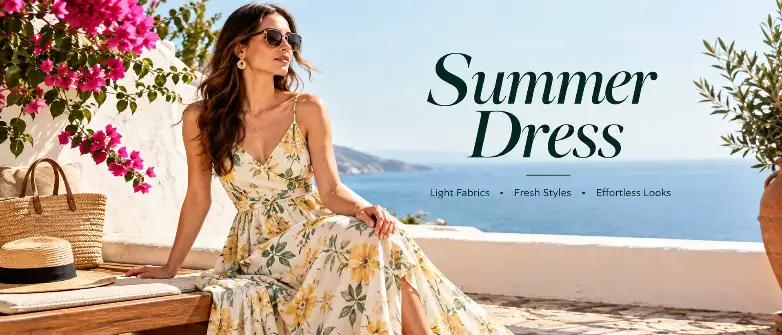
A summer dress is one of the easiest ways to build a comfortable warm-weather outfit. The right dress can keep you cool while giving you a polished look with very little styling effort.
The best choice depends on more than appearance. Fabric, fit, length, coverage, occasion, and climate all affect how comfortable and useful a summer dress will be. This guide explains the main styles, the fabrics to look for, how to style them, and how to choose a dress you will actually enjoy wearing.
What Is a Summer Dress?
A summer dress is a dress designed or commonly worn during warm weather. It usually uses lightweight materials, breathable construction, comfortable silhouettes, or warm-weather colors and prints.
There is no single shape that defines a summer dress. It can be short, midi, or long. They have sleeves or be sleeveless. It can be casual enough for errands or polished enough for an event.
Common examples include:
- Sundresses
- Cotton dresses
- Linen dresses
- Maxi dresses
- Midi dresses
- Mini dresses
- Shirt dresses
- Wrap dresses
- A-line dresses
- Floral dresses
- Relaxed day dresses
- Lightweight occasion dresses
The most useful summer dress is one that works for your actual lifestyle instead of simply looking good on a hanger.
What Makes a Good Summer Dress?
A good summer dress should balance comfort and style.
Look for these qualities:
- Lightweight or breathable fabric
- Comfortable movement
- A fit that does not restrict you
- Appropriate coverage for the occasion
- A practical length
- Fabric that works with your climate
- Easy care when possible
- Styling versatility
- Construction that feels comfortable against the skin
For very hot weather, fabric and airflow deserve special attention. A beautiful dress can become uncomfortable if it is heavy, clingy, poorly lined, or too restrictive.
Best Fabrics for Summer Dresses
Fabric can change how a dress feels throughout the day. Natural fibers and lightweight materials are often useful for warm-weather clothing because they can feel lighter and more breathable.
Cotton Summer Dresses
Cotton is a classic choice for everyday summer clothing.
A cotton summer dress can work well for:
- Errands
- Casual lunches
- Shopping
- Weekend outings
- Travel
- Everyday wear
Cotton is also available in many weights and weaves, so not every cotton dress will feel the same. Lightweight cotton generally makes more sense for very hot days than thick or heavily structured cotton.
Linen Summer Dresses
Linen is closely associated with warm-weather dressing because of its lightweight feel and relaxed appearance.
A linen summer dress works especially well for:
- Beach vacations
- Resort outfits
- Casual dinners
- Outdoor lunches
- Weekend trips
- Relaxed summer events
One thing to remember is that linen wrinkles easily. That is part of its natural look, but it may not be ideal if you want a perfectly smooth outfit throughout a long day.
Lightweight Viscose and Rayon
Viscose and rayon can create soft, flowing silhouettes.
These fabrics are useful when you want a dress with:
- Fluid movement
- Soft drape
- A less structured appearance
- Comfortable everyday styling
Always check the garment’s care instructions because fabric blends can behave differently during washing and drying.
Lawn Dresses
Lawn is especially useful for hot-weather dressing in South Asian climates. Its lightweight feel makes it popular for summer clothing.
A lawn summer dress can be suitable for:
- Everyday wear
- Casual gatherings
- Family events
- Warm-weather work outfits
- Relaxed summer occasions
The exact feel depends on the fabric quality, weave, construction, and any additional embroidery or layering.
Lightweight Blends
Fabric blends can combine different characteristics. For example, a cotton-linen blend may offer a different balance of softness, texture, drape, and wrinkle behavior than either fabric alone.
Always check the actual fiber composition rather than relying only on a label such as “summer dress.”
Popular Summer Dress Styles
Summer fashion offers plenty of dress shapes, so the best style depends on what you want from the outfit.
Summer Maxi Dress
A maxi dress usually reaches the ankle or lower part of the leg.
It can create an elegant, relaxed look while offering more leg coverage. Lightweight maxi dresses are particularly useful for vacations, outdoor dinners, casual gatherings, and everyday summer outfits.
Look for breathable fabric and enough room for comfortable movement.
Summer Midi Dress
A midi dress generally falls somewhere between the knee and ankle.
It offers a useful middle ground between a mini and maxi dress. A midi summer dress can work for:
- Office outfits
- Brunch
- Casual dinners
- Shopping
- Family gatherings
- Travel
Pairing a midi dress with simple sandals can create an easy daytime outfit.
Summer Mini Dress
A mini dress creates a shorter and more playful silhouette.
It can work well for:
- Casual outings
- Beach trips
- Holidays
- Informal parties
- Hot-weather weekends
Because the hem is shorter, consider the setting and your comfort when choosing one.
Summer Sundress
A sundress is usually a lightweight warm-weather dress, often with a sleeveless or open design.
Sundresses are popular for relaxed summer settings because they can be worn with minimal accessories.
A simple sundress can become several different outfits by changing the shoes, bag, jewelry, and outer layer.
Summer Shirt Dress
A shirt dress combines dress styling with details inspired by a traditional shirt.
Common features include:
- A front button opening
- Collar
- Waist belt
- Short or rolled sleeves
- Straight or relaxed shape
A lightweight shirt dress can work for casual settings and some workplaces, depending on the dress code.
Summer Wrap Dress
A wrap dress crosses over the body and usually creates a defined waist.
It can be adjusted to create a more personalized fit. This makes it a useful option for people who prefer some flexibility around the waist and upper body.
Summer A-Line Dress
An A-line dress is narrower near the upper body and gradually becomes wider toward the hem.
It creates a simple, balanced shape and can be easy to move in. An A-line summer dress works for both casual and slightly dressier settings.
How to Choose the Right Summer Dress
Choosing a summer dress becomes easier when you start with the situation rather than the trend.
Start With Your Climate
Think about the actual weather where you live.
For very hot conditions, consider:
- Lightweight fabrics
- Loose or relaxed shapes
- Breathable construction
- Less restrictive layers
- Comfortable necklines
- Sleeveless or short-sleeve options when appropriate
If your summer is warm but not extremely hot, you may have more freedom to choose structured fabrics and layered looks.
Consider How Long You Will Wear It
A dress that feels comfortable for a one-hour lunch may not feel comfortable after eight hours.
For long days, prioritize:
- Comfortable fabric
- Easy movement
- Secure straps
- Non-irritating seams
- Practical length
- Breathable construction
Comfort becomes even more important for travel or outdoor activities.
Think About the Dress Code
A beach dress and an office dress do not need to serve the same purpose.
For work, consider:
- More coverage
- Moderate hemlines
- Simple prints
- Structured silhouettes
- Appropriate necklines
For a vacation, you can usually experiment more with:
- Bright colors
- Prints
- Open silhouettes
- Flowing shapes
- Lightweight fabrics
Best Summer Dresses for Different Occasions
The same summer dress does not need to work everywhere.
Everyday Casual Wear
Choose simple shapes that are easy to move in.
Good options include:
- Cotton midi dresses
- Relaxed shirt dresses
- Simple sundresses
- A-line dresses
- Lightweight maxi dresses
Pair them with flat sandals, sneakers, or simple flats.
Summer Workwear
For work, choose a dress that matches your workplace dress code.
A midi shirt dress, simple A-line dress, or modest structured dress can create a polished look.
Add:
- Simple flats
- Loafers
- A structured bag
- Minimal jewelry
- A lightweight cardigan when needed
Summer Vacation
Vacation dressing allows more freedom.
Consider:
- Linen maxi dresses
- Printed sundresses
- Flowy midi dresses
- Lightweight beach dresses
- Relaxed shirt dresses
A dress that can be worn with both sandals and sneakers is particularly useful when packing light.
Summer Weddings
A summer wedding calls for more attention to fabric, color, silhouette, and formality.
Depending on the dress code, consider:
- Elegant midi dresses
- Flowing maxi dresses
- Refined floral prints
- Lightweight occasion dresses
- Polished solid colors
Avoid choosing an outfit based only on heat. The wedding invitation and venue should also guide your decision.
Summer Evening Events
For evening occasions, look for a dress with a slightly more polished finish.
You can create an elevated look through:
- Satin or refined lightweight fabrics
- Elegant jewelry
- Heeled sandals
- A small handbag
- A defined waist
- A sophisticated color
The goal is to look appropriate for the event without sacrificing comfort.
How to Style a Summer Dress
A summer dress does most of the work, but accessories can change its personality.
Summer Dress With Sandals
Flat sandals create a relaxed warm-weather outfit.
They work particularly well with:
- Maxi dresses
- Midi dresses
- Sundresses
- Linen dresses
Choose simple footwear when the dress already has a bold print or strong design.
Summer Dress With Sneakers
Sneakers give a dress a casual and modern feel.
Try sneakers with:
- Shirt dresses
- Midi dresses
- Simple cotton dresses
- Short summer dresses
This combination is useful for days when you expect to walk a lot.
Summer Dress With a Straw Bag
A woven or straw-style bag can reinforce a relaxed summer look.
It works especially well with:
- Linen dresses
- White dresses
- Floral dresses
- Beach dresses
- Vacation outfits
Summer Dress With a Light Layer
Air conditioning can make indoor spaces much cooler than outdoor temperatures.
A lightweight cardigan, overshirt, or jacket can make a summer dress more practical throughout the day.
Summer Dress With Jewelry
Simple jewelry can make an everyday dress look more polished.
For a printed dress, understated jewelry can prevent the outfit from looking too busy.
For a plain dress, a necklace, earrings, bracelet, or statement piece can add visual interest.
What Colors Work Well for Summer Dresses?
Summer dresses are available in almost every color, so there is no single correct palette.
Popular choices include:
- White
- Cream
- Beige
- Soft pink
- Blue
- Green
- Yellow
- Coral
- Lavender
- Pastel shades
- Natural earth tones
- Bright statement colors
The best color is one you enjoy wearing and can coordinate with your existing shoes and accessories.
A neutral summer dress can become more colorful through accessories. A bright dress may need only simple shoes and a small bag.
Floral Summer Dresses
Floral prints are a classic warm-weather choice.
The print can completely change the personality of the dress.
Small floral patterns can create a delicate appearance, while larger floral prints can become the main visual feature of an outfit.
When styling a floral summer dress, keep the rest of the outfit relatively simple if the print is already bold.
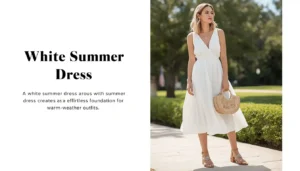
White Summer Dresses
A white summer dress creates a clean and fresh appearance.
It can work for:
- Beach trips
- Vacations
- Casual lunches
- Daytime events
- Summer parties
Pay attention to transparency, especially with lightweight white fabrics. A dress that looks opaque indoors may appear more transparent in bright sunlight.
How Should a Summer Dress Fit?
The best fit depends on the design and your comfort.
Check:
- Shoulder position
- Bust area
- Waist placement
- Armholes
- Dress length
- Movement around the hips
- Strap security
- Fabric tension
Try sitting, walking, and raising your arms when possible.
A dress may look perfect while standing but feel uncomfortable when you move.
Summer Dress Fit for Different Style Preferences
There is no universal “perfect” silhouette.
Some people prefer loose, flowing dresses, while others prefer defined waists or structured shapes.
For a Relaxed Look
Try:
- Loose maxi dresses
- Oversized shirt dresses
- Relaxed cotton dresses
- Straight silhouettes
For a Defined Waist
Try:
- Wrap dresses
- Belted shirt dresses
- Fit-and-flare dresses
- Waist-shaped midi dresses
For a Minimalist Look
Choose:
- Solid colors
- Clean lines
- Simple necklines
- Minimal accessories
- High-quality basic fabrics
The goal should be a fit that feels comfortable and matches your personal style.
Summer Dress Trends to Watch
Current summer fashion has continued to emphasize lightweight materials and wearable silhouettes. Recent fashion coverage highlights linen, cotton, sheer textures, flowing shapes, maxi dresses, and a range of midi and mini silhouettes.
Some of the most noticeable directions include:
Relaxed Maxi Silhouettes
Long dresses remain useful because they combine movement with an elegant silhouette.
Lightweight Natural Fabrics
Linen and cotton remain strong choices for warm-weather wardrobes because they fit the broader preference for airy summer dressing.
Clean Minimal Dresses
Simple dresses in neutral or soft colors can be easier to wear repeatedly because accessories can change the look.
Romantic Details
Ruffles, soft volume, floral patterns, and delicate details can give a basic summer dress more personality.
Modern Drop-Waist Shapes
Drop-waist silhouettes have appeared in summer fashion coverage as a more fashion-forward alternative to traditional waist-focused dresses.
Trends should be treated as options rather than rules. A dress that fits your climate and lifestyle will usually provide more value than a trend you never feel comfortable wearing.
How to Build a Small Summer Dress Collection
You do not need a large wardrobe to create several summer outfits.
A practical collection might include:
- One casual cotton dress
- One versatile midi dress
- One lightweight maxi dress
- One simple dress for slightly dressier occasions
- One printed or floral dress
You can then change the appearance through footwear, bags, jewelry, belts, and layers.
This approach makes it easier to repeat outfits without making them look exactly the same.
Summer Dress Shopping Checklist
Before buying a summer dress, ask:
- Is the fabric suitable for my climate?
- Can I move comfortably in it?
- Is the length practical?
- Is it transparent in bright light?
- Does it require special care?
- Can I wear it with shoes I already own?
- Can I style it for more than one occasion?
- Is the neckline comfortable?
- Are the straps secure?
- Does the dress fit properly when sitting and walking?
- Will I still want to wear it after the trend changes?
These questions can prevent impulse purchases that look attractive but spend most of their time in the closet.
Common Summer Dress Mistakes
Choosing Style Over Comfort
A dress may look beautiful but become difficult to wear if it is too tight, heavy, or warm.
Ignoring Fabric
A summer-friendly silhouette cannot completely compensate for uncomfortable fabric.
Buying the Wrong Size
Do not rely only on the size printed on the label. Check measurements whenever they are available.
Forgetting Transparency
Light colors and lightweight fabrics may need a lining or suitable undergarment.
Wearing Too Many Accessories
A summer dress often looks better when the accessories support the outfit rather than compete with it.
Ignoring the Occasion
A beach sundress may not be suitable for a formal workplace or wedding.
Following Every Trend
Trends change. Choose current details that still work with your personal style and existing wardrobe.
How to Care for Summer Dresses
Proper care can help dresses maintain their shape and appearance.
Always follow the garment’s care label first.
General practices include:
- Wash according to the recommended instructions.
- Avoid excessive heat when the fabric does not tolerate it.
- Do not leave damp dresses crumpled for long periods.
- Store delicate dresses carefully.
- Use appropriate hangers for garments that can stretch.
- Iron or steam according to the fabric’s needs.
- Pay extra attention to linen, delicate blends, and embellished dresses.
Care requirements vary considerably between fabrics, so the garment label should take priority over general advice.
Summer Dress vs Sundress
The terms are often used interchangeably, but they can have slightly different meanings.
A summer dress is a broad category covering many warm-weather dress styles.
A sundress usually refers to a lighter, more relaxed warm-weather dress, often associated with sleeveless construction, casual settings, and outdoor wear.
In simple terms, a sundress can be considered one type of summer dress.
Are Maxi Dresses Good for Summer?
Yes, a lightweight maxi dress can be very practical for summer.
The key is the fabric and construction. A loose maxi made from a breathable lightweight material can feel very different from a heavy, tight-fitting maxi dress.
Consider:
- Fabric weight
- Airflow
- Length
- Lining
- Fit
- Climate
What Is the Best Summer Dress for Hot Weather?
For very hot weather, prioritize a lightweight, breathable dress with enough room for comfortable movement.
Cotton, linen, lightweight lawn, and some lightweight viscose garments can all be options depending on the construction and personal preference.
The “best” dress is not determined by fabric alone. A well-designed dress needs to combine suitable fabric, comfortable fit, and practical coverage.
Can You Wear a Summer Dress to Work?
Yes, if the dress matches your workplace dress code.
Midi dresses, modest shirt dresses, simple A-line dresses, and structured styles can work well in many professional environments.
Consider adding:
- A lightweight cardigan
- Blazer
- Simple flats
- Loafers
- Structured handbag
- Minimal jewelry
What Shoes Go With a Summer Dress?
Many shoe styles work with summer dresses.
Common choices include:
- Flat sandals
- Heeled sandals
- Sneakers
- Ballet flats
- Loafers
- Espadrilles
- Simple slip-on shoes
The occasion should guide the final choice.
Can You Wear a Summer Dress to a Wedding?
Yes, but the dress should match the wedding’s dress code, venue, time, and level of formality.
A refined midi or maxi dress can work for many summer weddings. For more formal events, consider a polished fabric, elegant accessories, and dressier shoes.
Always check the invitation before choosing the outfit.
How Can You Make a Summer Dress Look More Elegant?
Small styling changes can make a simple dress look more polished.
Try:
- Structured accessories
- Refined sandals
- Minimal jewelry
- A neat hairstyle
- A small handbag
- A defined waist
- A simple outer layer
You do not need a heavily decorated dress to create an elegant outfit.
What Should You Wear Under a Summer Dress?
The answer depends on the dress.
Possible options include:
- A suitable bra
- Seamless underwear
- A slip
- Shorts designed for layering
- A camisole
For lightweight or sheer dresses, check the outfit in natural light before leaving home.
How Do You Make a Summer Dress Work for Evening?
Start with the same dress and change the styling.
For example:
Day: cotton midi + flat sandals + casual bag
Evening: same midi + heeled sandals + small handbag + simple jewelry
This is one of the easiest ways to get more use from a summer dress.
Frequently Asked Questions
What is a summer dress?
A summer dress is a warm-weather dress designed with features such as lightweight fabric, breathable construction, comfortable movement, or seasonal styling.
What fabric is best for summer dresses?
Cotton and linen are popular choices for warm weather. Lightweight lawn and some viscose fabrics can also work well depending on construction, climate, and personal preference.
What is the difference between a summer dress and a sundress?
A summer dress is a broad category of warm-weather dresses. A sundress is generally a lighter, more relaxed style within that category.
Are maxi dresses good for summer?
Yes. A lightweight, loose-fitting maxi dress can be comfortable in summer. Fabric weight and airflow matter more than length alone.
Are cotton dresses good for hot weather?
Lightweight cotton dresses can be a practical option for hot weather because they are often comfortable and breathable. The exact experience depends on the fabric weight and garment construction.
Can I wear a summer dress to work?
Yes, when the dress follows your workplace dress code. Midi dresses, shirt dresses, and simple A-line styles are often easy to adapt for professional settings.
What shoes look best with summer dresses?
Sandals, sneakers, flats, loafers, espadrilles, and heeled sandals can all work. Choose footwear based on the dress and occasion.
How do I choose a summer dress for hot weather?
Prioritize lightweight fabric, comfortable movement, suitable coverage, breathable construction, and a fit that does not feel restrictive.
Can I wear a summer dress to a wedding?
Yes. Choose a dress that matches the wedding’s dress code, venue, time, and formality.
How can I style one summer dress in different ways?
Change your shoes, bag, jewelry, belt, hairstyle, and outer layer. A simple dress can create several different outfits with small styling changes.
Are linen dresses good for summer?
Linen dresses can be excellent warm-weather options because of their lightweight, relaxed feel. However, linen naturally wrinkles, so consider whether that fits your preferred look.
Should a summer dress be loose or fitted?
Either can work. A relaxed fit can improve airflow and comfort in hot weather, while a fitted dress can create a more defined silhouette. The best choice depends on the design, fabric, climate, and personal preference.
Conclusion
A good summer dress should do more than look seasonal. It should feel comfortable, suit the weather, fit your lifestyle, and work for the occasions you actually attend.
Start with fabric and fit, then consider length, color, silhouette, and styling. Cotton, linen, lawn, and other lightweight fabrics can be useful choices for warm conditions, while maxi, midi, mini, shirt, wrap, and A-line styles offer different ways to build a summer wardrobe.
The smartest approach is simple: choose dresses that feel good to wear, work with your existing wardrobe, and match your real daily needs. Trends can add inspiration, but comfort and versatility make a summer dress worth wearing again and again.
Practical Examples
For a very hot day:
Choose a lightweight cotton or lawn midi dress, flat sandals, a simple bag, and minimal jewelry.
A vacation:
Try a flowing linen maxi dress with sandals, sunglasses, and a lightweight woven bag.
The casual work:
Choose a simple midi or shirt dress with flats, a structured bag, and a lightweight cardigan.
An evening dinner:
Wear a refined midi or maxi dress with heeled sandals, delicate jewelry, and a small handbag.
For a weekend outing:
Pair a casual summer dress with clean sneakers and a crossbody bag.

Shahid Imran is the founder of InfoPrimeX, where he writes about AI tools, technology, gadgets, apps, travel, and digital trends. His mission is to provide practical, easy-to-understand information that helps readers learn smarter, explore better, and stay ahead.
Website: infoprimex.com