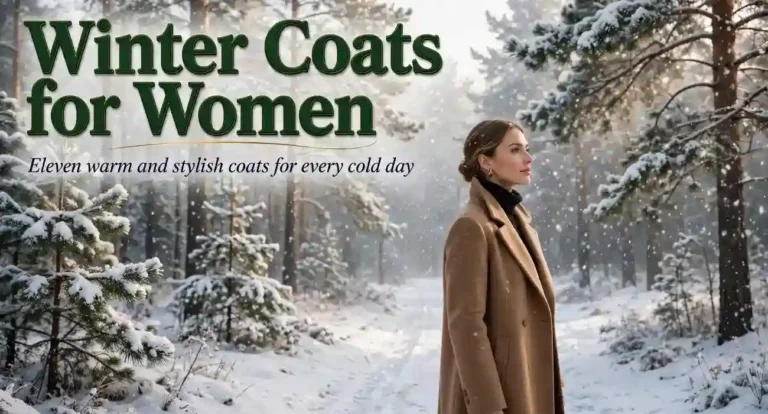
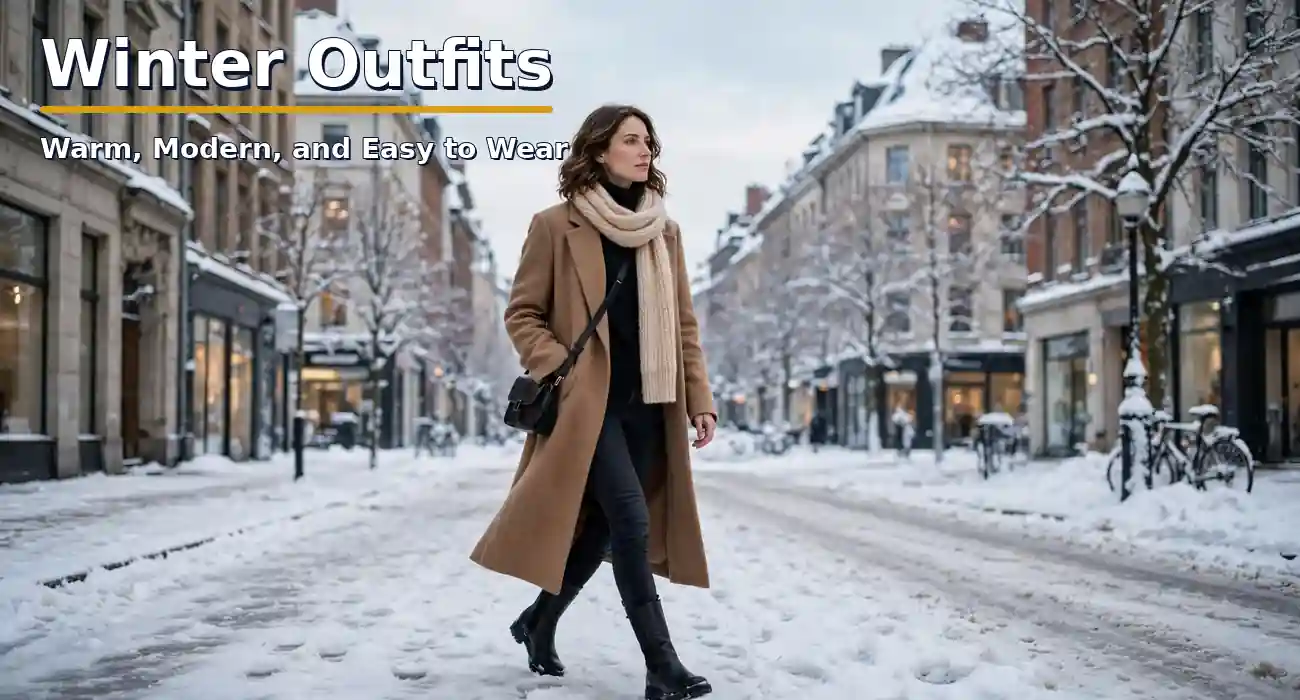
Winter is the perfect time to enjoy cozy layers, warm fabrics, and beautiful outfits that make you feel comfortable and confident. From stylish sweaters and classic coats to cute winter dresses, jeans, boots, and soft scarves, there are so many ways to look fashionable while staying warm. Whether you love simple everyday clothing, elegant winter fashion, or trendy outfits for special occasions, the right combination can make every winter day feel special. In this guide, you’ll discover beautiful winter outfits for women, including casual winter looks, classy outfit ideas, cute layered styles, and practical clothing combinations that are easy to wear and style throughout the season.
Quick Answer
A good winter outfit is three layers working together: a thin base layer close to the skin, a warm middle layer such as a sweater or cardigan, and an outer layer such as a wool coat or puffer that blocks wind and finishes the look. Keep to three colours at most, choose thin warm fabrics, and let one layer peek out slightly longer than the next.
Key Takeaways
- Warmth comes from layers and fabrics, not from one thick jumper.
- The three-layer method works for women, men, work, and weekends.
- The 60-30-10 colour rule keeps winter outfits looking intentional, not random.
- Spend on the coat and the boots first; save on the layers underneath.
- Every outfit in this article is original guidance in plain language, with realistic examples and no invented prices, statistics, or trends.
Table of Contents
- What Are Winter Outfits? A Simple Definition That Actually Helps
- Winter Outfits for Women: Warm, Stylish Ideas That Work Every Day
- Winter Outfits for Men: Smart Layers Without the Bulk
- Casual Winter Outfits for Everyday Life
- Winter Outfits for Work: Professional and Warm at the Same Time
- Winter Date Night and Party Outfits
- How to Layer Winter Outfits Without Looking Bulky
- Best Winter Outfit Colour Combinations
- Winter Outfits by Weather: Cold, Snow, Rain, and Wind
- Affordable Winter Outfits: Look Expensive on a Budget
- Common Winter Outfit Mistakes to Avoid
- FAQs About Winter Outfits
- A Final Thought, in a Human Voice
What Are Winter Outfits? A Simple Definition That Actually Helps
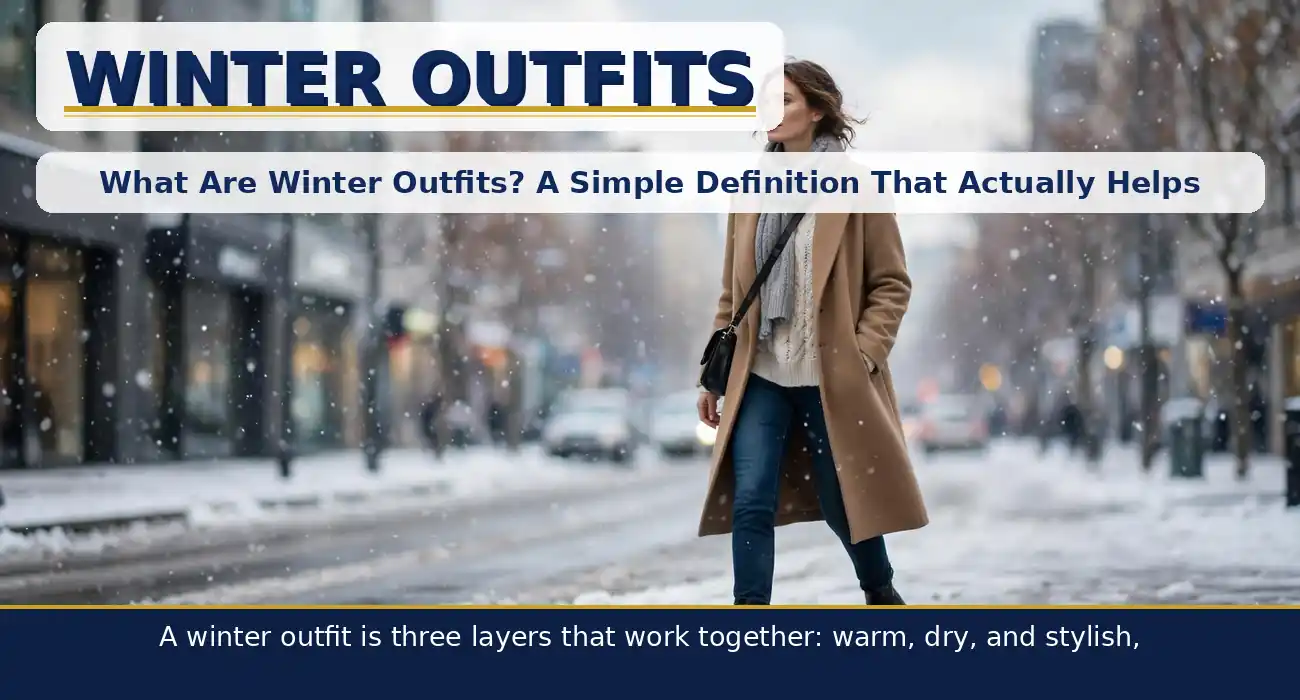
A winter outfit is not a single item. It is a small system: clothes chosen together so you stay warm outside, comfortable inside, and stylish in both places. The system has three parts, and each part has a job.
“A winter outfit is three layers that work together: warm, dry, and stylish,”
The base layer sits against your skin. It should be thin, smooth, and comfortable — a fitted long-sleeve top, a thin turtleneck, or a thermal top in merino wool or a soft synthetic blend. Its job is comfort and keeping you dry, not looking impressive. Nobody sees it much, and that is fine.
The middle layer adds warmth and character. This is your sweater, cardigan, fleece, or flannel shirt. This is where colour and texture show up, so one statement piece is enough. A chunky cable knit, a soft cashmere crewneck, or a long cardigan can carry a whole outfit.
The outer layer blocks wind and finishes the look. A wool coat, a puffer, a trench, or a shearling-style jacket. Try it on over your middle layer before you buy it or wear it out, because a coat that pulls across a sweater will never look right, no matter how good it is on its own.
Think of it like this: base for comfort, middle for warmth and personality, outer for weather and shape. When all three work together, you get a winter outfit. When one of them is missing, you get either a cold outfit or a bulky one.
Winter Outfits for Women: Warm, Stylish Ideas That Work Every Day
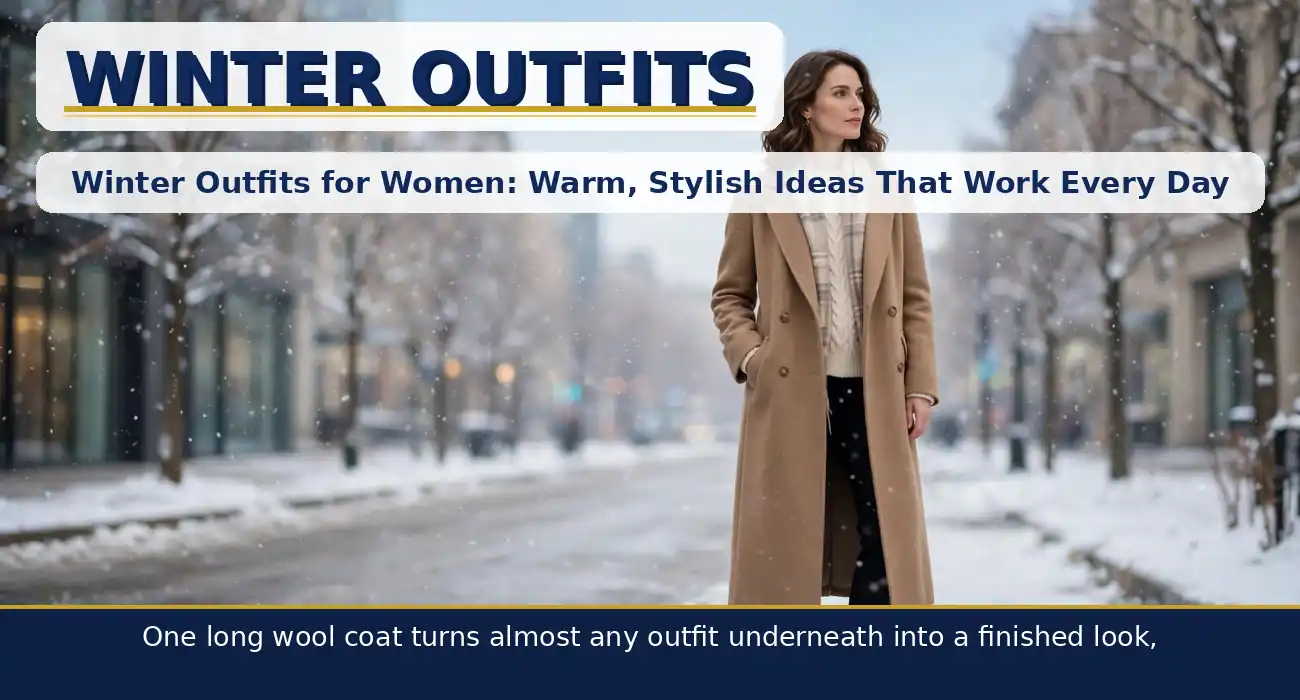
Winter style for women works best when it starts with pieces you already own and adds one strong outer layer. You do not need a new wardrobe. You need a few reliable combinations.
“One long wool coat turns almost any outfit underneath into a finished look,”
Try this everyday formula first: a thin turtleneck, dark straight jeans, ankle boots, and a long camel coat. It works for school runs, coffee, errands, and a casual lunch, and it takes five minutes to put together. Swap the jeans for a knit midi dress and tights, and the same coat turns it into something smarter.
For a smart casual day, try a thin black turtleneck, a grey blazer, charcoal trousers, and a navy wool coat with ankle boots. The blazer adds structure, the turtleneck adds warmth, and the coat adds polish. For a softer look, try a cream cable-knit sweater, a pleated midi skirt, tights, knee-high boots, and a long coat in camel or charcoal. The textures do the work: knit, wool, and leather together look expensive without trying hard.
Accessories matter more in winter than in summer, because they are visible all day. A cashmere scarf in a warm colour, leather gloves, and a simple beanie can lift a plain outfit. Keep jewellery simple: small earrings and one ring are enough when scarves and collars are already doing a lot.
Winter Outfits for Men: Smart Layers Without the Bulk
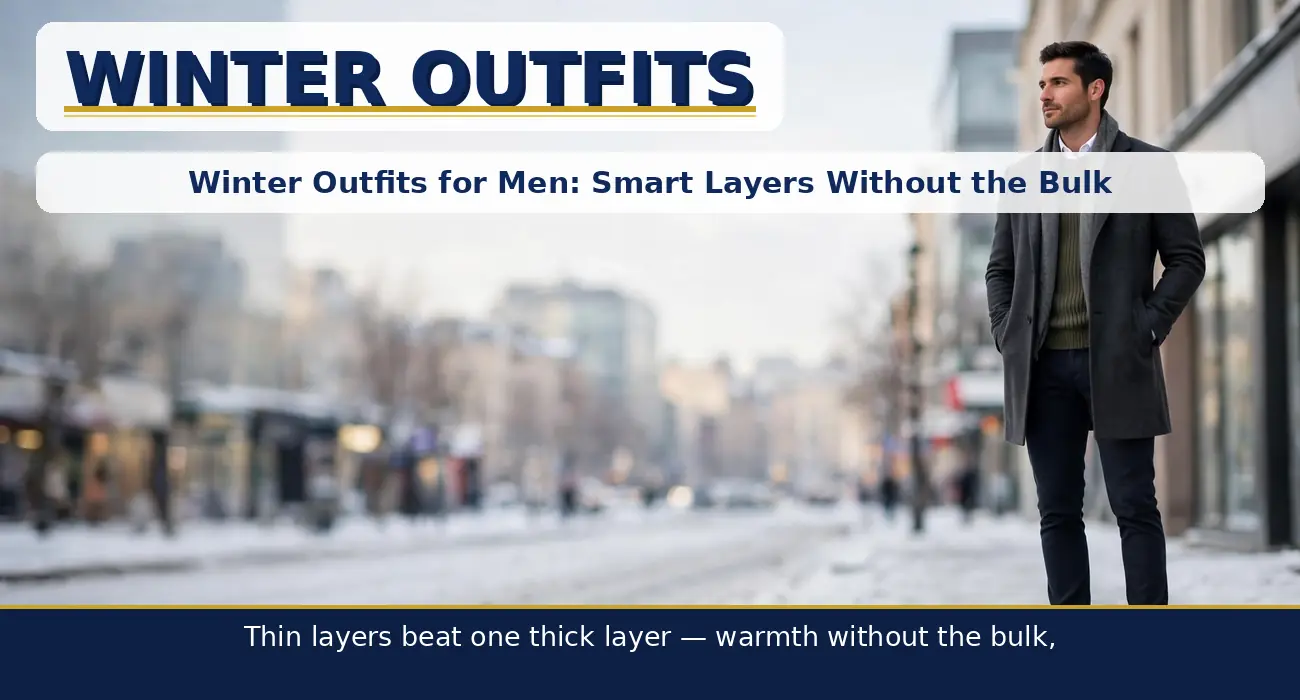
Men’s winter outfits fail in two ways: too thin, so you freeze, or too thick, so you look like a walking duvet. The fix is the same three-layer system, with fitted pieces underneath and volume only in the outer layer.
“Thin layers beat one thick layer — warmth without the bulk,”
A reliable casual formula: a grey tee, a navy crewneck sweater, dark jeans, an olive field jacket, and white sneakers or boots. It is warm, it is simple, and it works for most winter days that are not freezing. For a smarter day, try a light blue Oxford shirt, a charcoal merino crewneck, stone chinos, a camel overcoat, and Chelsea boots. The shirt collar peeking out, the sweater over it, and the overcoat on top — that is layering done right, and it looks intentional rather than accidental.
For very cold days, add a thermal base layer under the shirt. It is invisible, it is warm, and it means you do not need a thicker jumper. Choose trousers in heavier fabrics — wool trousers or lined chinos — and boots with a proper sole, because cold feet ruin even the best outfit. A wool scarf and leather gloves finish the look without adding bulk.
Casual Winter Outfits for Everyday Life
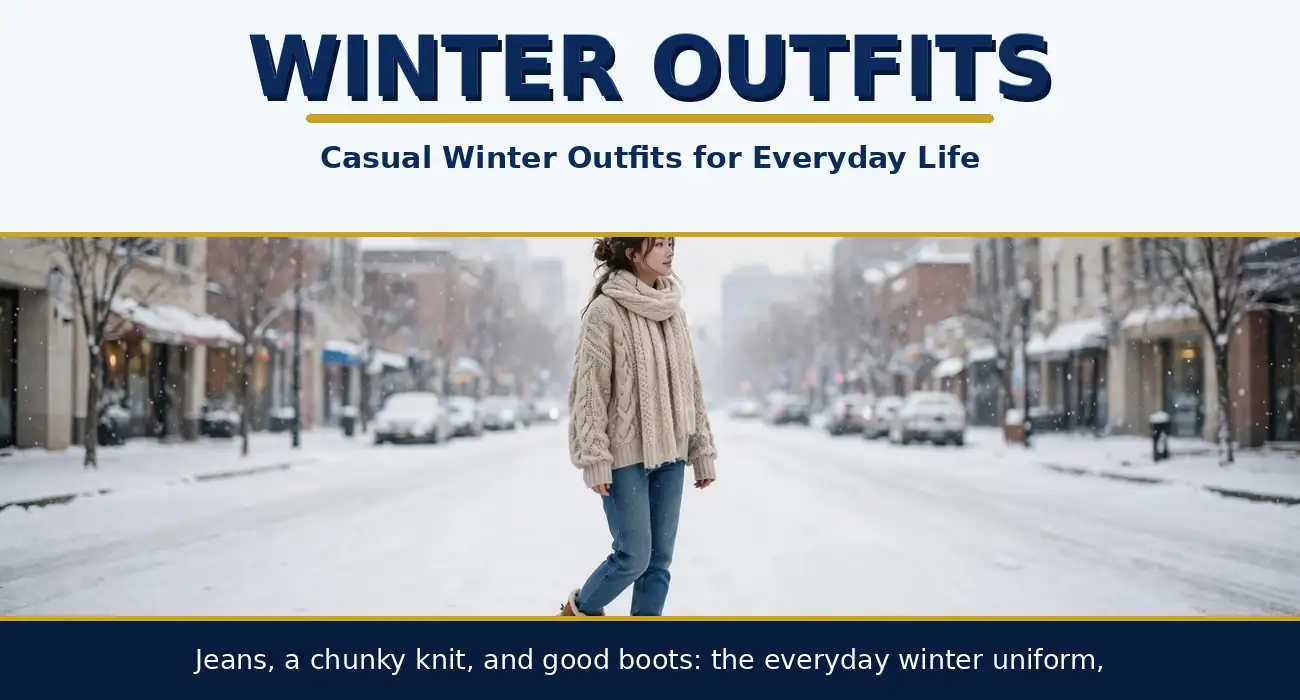
Casual winter outfits are the ones you wear most, so they deserve the most thought. The goal is simple: warm, comfortable, and put-together, without looking like you tried too hard.
“Jeans, a chunky knit, and good boots: the everyday winter uniform,”
Start with a uniform and vary it. The uniform is dark jeans or cords, a chunky knit sweater, a warm coat, and boots. Change the colour of the knit, change the coat, change the scarf, and you have a week’s worth of outfits from the same base. A striped long-sleeve tee under an oatmeal cardigan, with dark jeans and a camel coat, is a softer version of the same idea.
For weekends, swap the jeans for lined joggers and the coat for a puffer, and add a beanie. For a walk in the park, add a fleece mid-layer under the puffer and waterproof boots. The trick is to dress for what you are actually doing, not for a photo. A beautiful outfit that leaves you cold after twenty minutes is not a good casual outfit, no matter how it looks.
Winter Outfits for Work: Professional and Warm at the Same Time
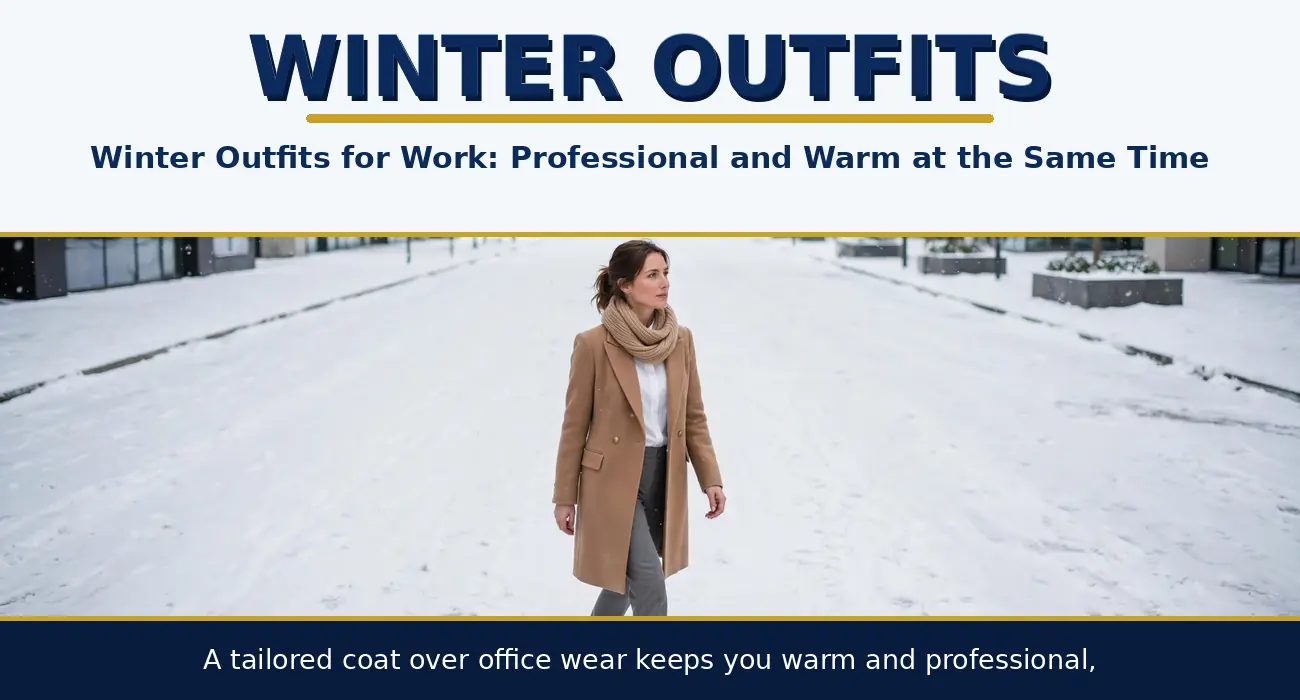
Work outfits in winter have a special problem: you are cold outside and warm inside, and you need to look professional in both places. The answer is layers you can remove without ruining the outfit.
“A tailored coat over office wear keeps you warm and professional,”
For women, try a thin turtleneck under a tailored blazer, with wool trousers or a midi skirt and tights, and a long wool coat on top. Indoors, remove the coat and you are still dressed for work. Ankle boots or loafers with thick socks work well, and a structured tote carries the scarf and gloves when you arrive.
For men, try an Oxford shirt, a merino crewneck, tailored trousers, and a wool overcoat, with Chelsea boots. The crewneck over the shirt is warm and smart, and the overcoat makes the whole outfit look finished. Avoid very chunky knits at work unless your office is casual; a fine knit looks sharper and layers better under a blazer.
One practical tip: keep a pair of indoor shoes at work if you walk in snow or rain. Wet boots under a desk are uncomfortable all day, and dry shoes make the whole outfit feel better.
Winter Date Night and Party Outfits

Winter evenings are where style gets to shine, because the coat comes off and the outfit underneath finally gets seen. The trick is to look special without freezing on the way there.
“Velvet, satin, and a warm coat — party style that still keeps you warm,”
For women, a velvet midi dress or a satin slip dress with a fine knit over it works beautifully, with tights, heeled ankle boots, and a long coat. A little sparkle — earrings, a clutch, a touch of shimmer — goes a long way in winter light. For men, dark trousers, a black turtleneck, a blazer, and a wool overcoat is simple, sharp, and warm. Add a scarf and leather gloves for the walk, and remove them when you arrive.
Choose fabrics that look rich in low light: velvet, satin, wool, and leather all catch evening light well. And plan the coat as part of the outfit, not as an afterthought. A beautiful dress under a shapeless coat still feels like a compromise. A beautiful dress under a tailored coat feels like a complete look.
How to Layer Winter Outfits Without Looking Bulky
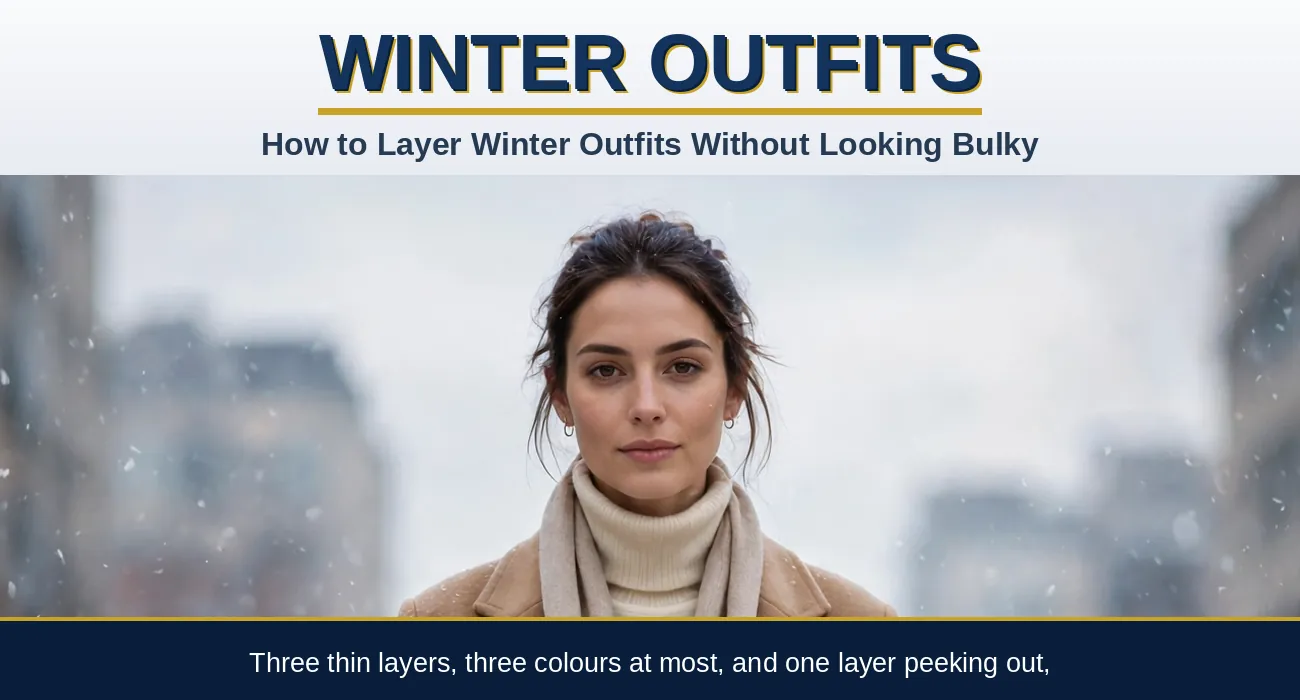
Layering is the skill that makes winter outfits work, and it is simpler than it looks. The whole method fits in three rules.
“Three thin layers, three colours at most, and one layer peeking out,”
Rule one: three layers, thin to thick. Base layer thin and fitted, middle layer warm, outer layer roomy. If a layer bunches, pulls, or fights the one above it, it is the wrong layer, not the wrong outfit.
Rule two: no more than three main colours. A neutral base, a second colour, and one accent is enough. For example, navy, cream, and camel. Or charcoal, cream, and burgundy. Too many colours make layers look messy; a limited palette makes them look intentional.
Rule three: let one layer peek out. A shirt hem below a sweater, a collar above a crewneck, a cardigan edge longer than the coat — one small detail like that shows the layers are deliberate. Two or three peeking layers look untidy; one looks styled.
A practical example: a light blue Oxford shirt under a charcoal sweater, finished with a camel overcoat. The collar shows, the hem shows slightly, and the colours are limited. That is the whole method, in one outfit.
Best Winter Outfit Colour Combinations
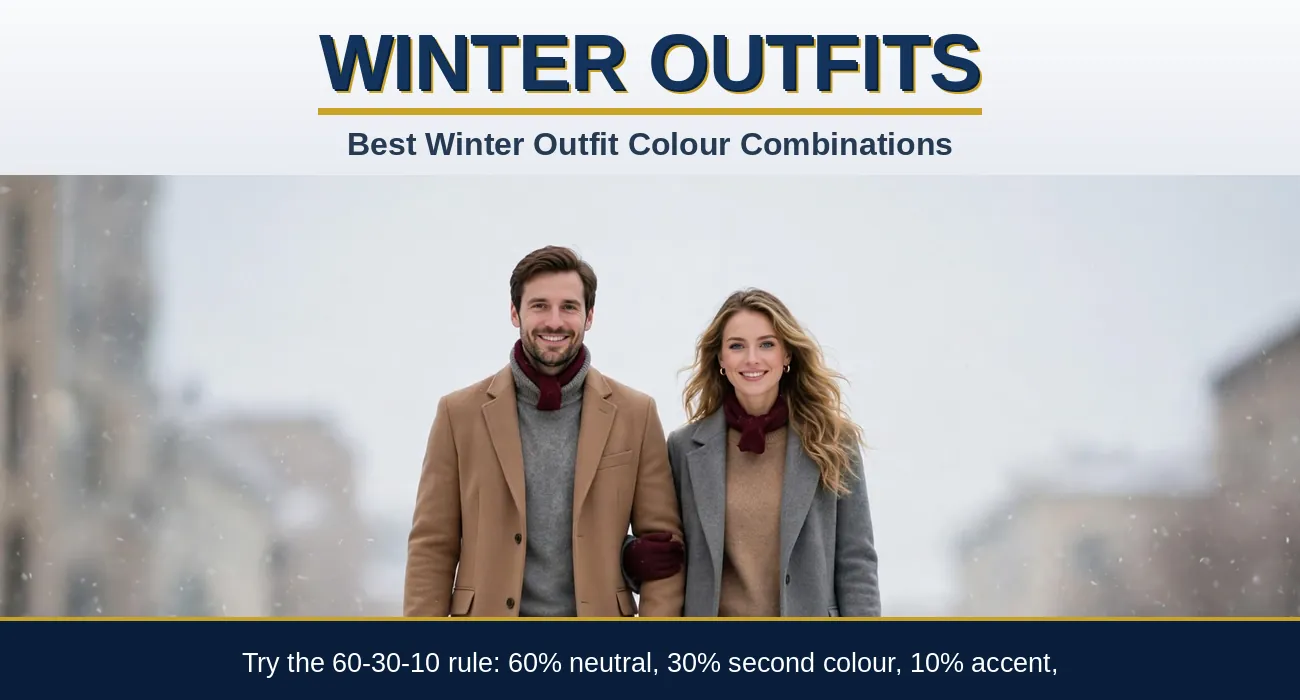
Winter colours work best when they are rich and a little deep. Bright summer colours can feel out of place in grey winter light, but deep, warm, and neutral colours look right all season.
“Try the 60-30-10 rule: 60% neutral, 30% second colour, 10% accent,”
The 60-30-10 rule is the easiest way to use colour well. Sixty percent is your neutral base — navy, charcoal, cream, black, or camel. Thirty percent is your second colour — olive, burgundy, brown, or grey. Ten percent is your accent — a scarf, a beanie, a bag, or a pair of gloves in a warmer colour such as mustard, rust, or deep red.
Combinations that work well together:
- Navy, cream, and camel: polished and calm, good for work and weekends.
- Charcoal, cream, and burgundy: rich and warm, good for evenings.
- Olive, cream, and brown: relaxed and earthy, good for casual days.
- Black, grey, and deep red: sharp and simple, good for a smart look.
- Cream, brown, and camel: soft and warm, good for a relaxed, expensive-looking outfit.
Texture matters as much as colour. A cream cable-knit sweater, a structured wool coat, and corduroy trousers in the same colour family look interesting because the surfaces are different, even when the colours are close. That is how neutral outfits avoid looking boring.
Winter Outfits by Weather: Cold, Snow, Rain, and Wind
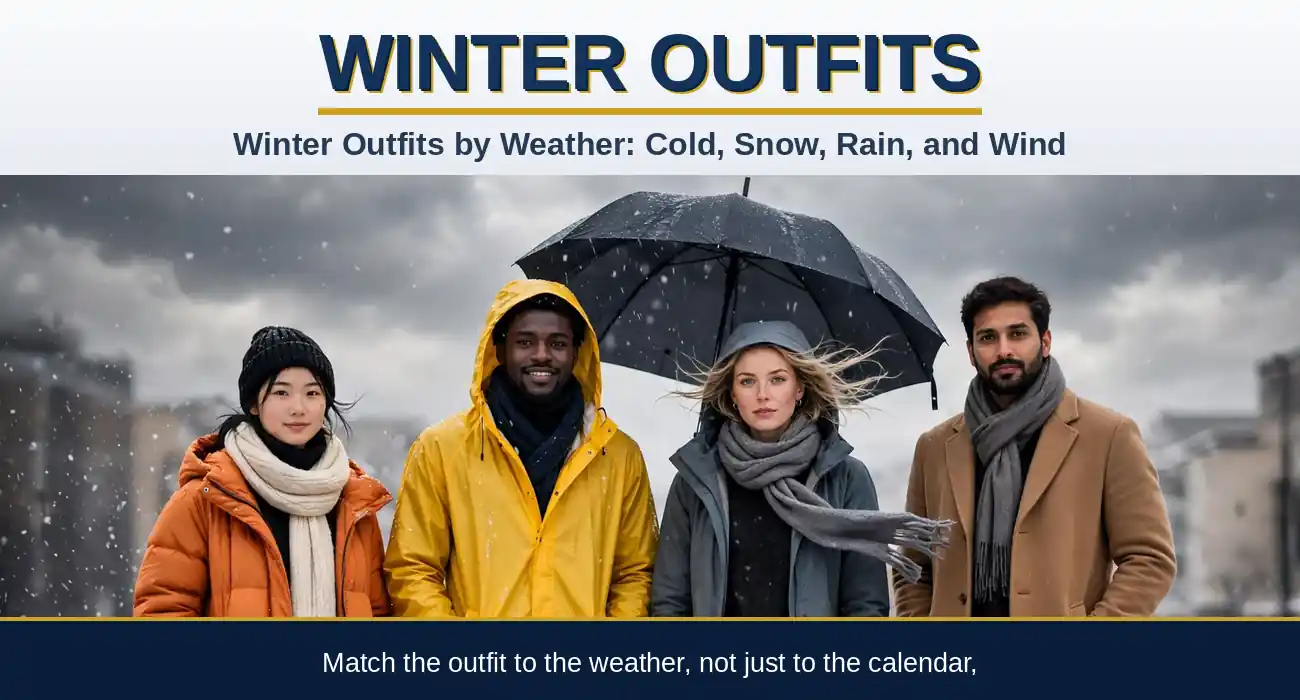
The biggest winter mistake is dressing for the calendar instead of the weather. A dry cold day, a snowy day, a rainy day, and a windy day need different outfits, even in the same week.
“Match the outfit to the weather, not just to the calendar,”
For dry cold, the three-layer method is enough: thermal base, knit middle, wool coat outer, with a scarf and gloves. For snow, add waterproof boots with grip, a puffer or a waterproof outer layer, and a beanie that covers your ears. Keep the layers underneath the same; change the outer layer and the shoes.
For rain, the outer layer must be waterproof, not just warm. A waterproof coat or a trench with a warm layer underneath works better than a beautiful wool coat that soaks through. For wind, the outer layer must block wind: a close-fitting coat with a high collar, a scarf tucked in properly, and gloves that actually fit. Wind finds every gap, so close the gaps first and worry about style second.
Check the weather the night before, not in the morning. Choosing the outfit the night before saves the morning rush, and it means you dress for the day you are actually going to have.
Affordable Winter Outfits: Look Expensive on a Budget

Good winter style does not need a big budget. It needs a few good pieces, chosen well, and worn often.
“Spend on the coat and the boots. Save on everything underneath,”
The coat and the boots are the pieces people see most, and they are the pieces that keep you warmest, so they deserve the biggest share of your budget. A good wool coat and good boots, bought once and worn for years, cost less per wear than three cheap coats that never quite work.
Save on the layers underneath. A plain thermal top, a simple crewneck, and dark jeans do not need to be expensive to look good, because the coat covers most of them. Buy neutrals first — navy, charcoal, cream, camel — because they mix with everything, and add one accent colour later, in a scarf or a beanie, rather than in an expensive coat you will tire of.
Try the seven-piece challenge: a neutral tee, a button-down shirt, a navy crewneck, a cream cardigan, dark jeans, charcoal trousers, and one good coat. Those seven pieces, mixed well, make far more outfits than seven random pieces ever will. That is how a small wardrobe looks big, and how a modest budget looks generous.
Common Winter Outfit Mistakes to Avoid
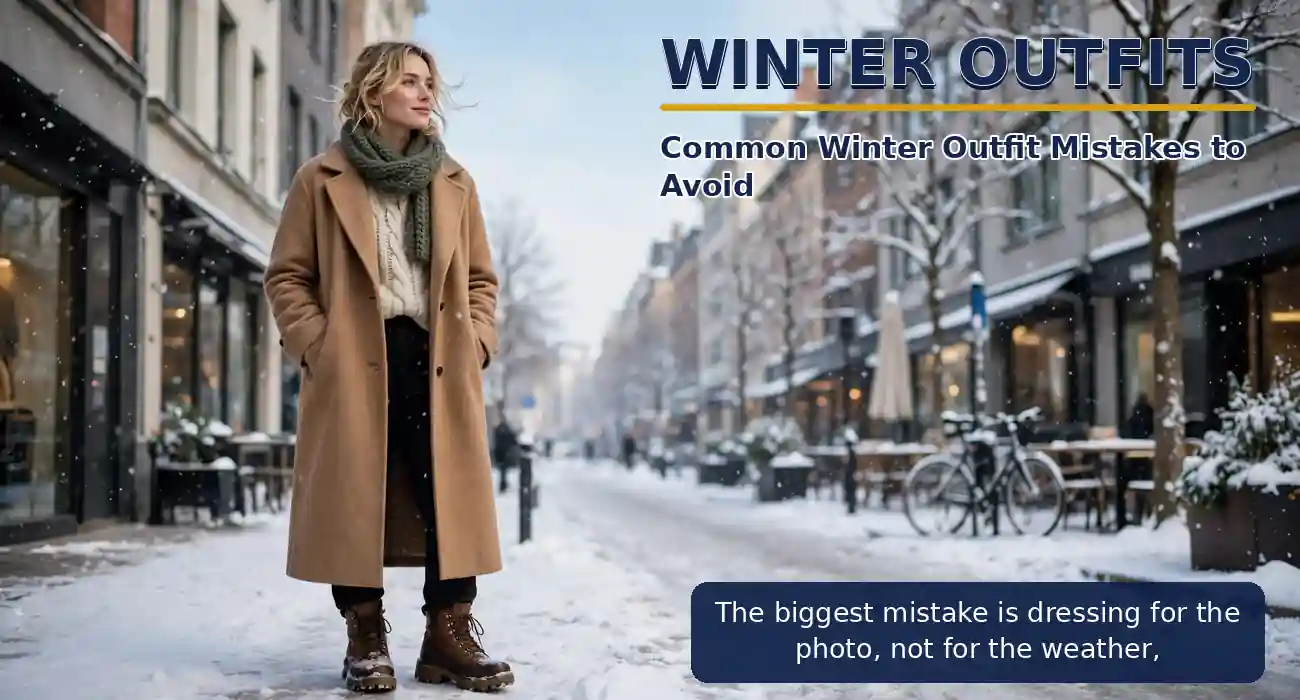
Most winter outfit problems come from a few common mistakes, and all of them are easy to fix once you see them.
“The biggest mistake is dressing for the photo, not for the weather,”
Mistake one: one thick layer instead of three thin ones. A single thick jumper is warm until you go indoors, and then it is too warm, with nothing to remove. Three thin layers let you adjust through the day.
Mistake two: too many colours. Four or five colours in one outfit fight each other, and the layers look accidental. Three colours at most, with the 60-30-10 rule, keeps it calm.
Mistake three: the wrong outer layer. A coat that is too tight over a sweater, a wool coat in heavy rain, or a short jacket on a freezing day — all of these undo an otherwise good outfit. Match the outer layer to the weather and to what is underneath it.
Mistake four: forgetting the feet. Cold, wet feet make every outfit feel wrong. Good boots with grip and warm socks are not an accessory; they are part of the outfit.
Mistake five: buying for a fantasy winter instead of your real one. If you walk to work, drive, take the train, and spend weekends outdoors, your outfits need to work for all of those days, not just for a perfect snowy photo.
FAQs About Winter Outfits
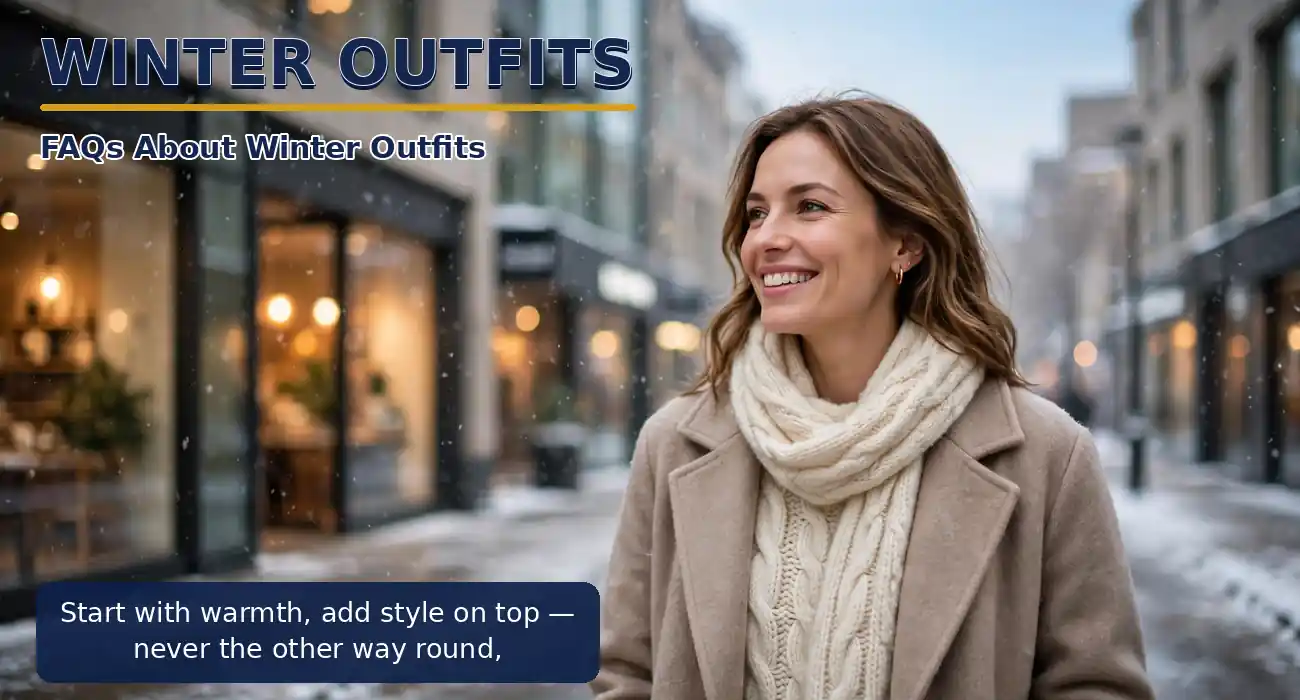
“Start with warmth, add style on top — never the other way round,”
That one line answers most winter outfit questions before they are asked. Warmth first, style second, and the rest falls into place.
What are winter outfits?
Winter outfits are clothes chosen together for cold weather: a thin base layer, a warm middle layer, and a weatherproof outer layer, with warm accessories such as a scarf, gloves, a beanie, and boots.
How do I layer clothes in winter?
Start with a thin, close-fitting base layer, add a warmer middle layer such as a sweater or cardigan, and finish with an outer layer cut roomy enough to fit over both without pulling. Keep to three colours, and let one layer show slightly longer than the next.
How many layers do I need in winter?
Three layers are enough for most winter days: base, middle, and outer. On very cold days, add a thermal base layer underneath, or a second thin middle layer, rather than one very thick jumper.
What should I wear in winter to stay warm and stylish?
Choose thin warm fabrics such as merino wool and cashmere, layer them in three steps, use the 60-30-10 colour rule, and spend on a good coat and boots. Warmth and style work together when the layers are thin and the colours are limited.
What colours go with winter outfits?
Navy, charcoal, cream, camel, olive, brown, and burgundy work well together. Try navy, cream, and camel for a polished look, or charcoal, cream, and burgundy for a warmer evening look.
Are puffer jackets good for winter?
Yes, for cold and snowy days a puffer is warm and practical, especially with a waterproof finish. For smarter occasions, a wool coat usually looks more polished, so choose the outer layer by the day, not by habit.
What are the best winter outfits for women?
A thin turtleneck, dark jeans, ankle boots, and a long camel coat is a reliable everyday outfit. For smarter days, a turtleneck, blazer, tailored trousers, and a wool coat works well, and a knit dress with tights and knee-high boots is a softer option.
What are the best winter outfits for men?
A tee, a crewneck sweater, dark jeans, a field jacket, and boots is a reliable casual outfit. For smarter days, an Oxford shirt, a merino crewneck, chinos, a camel overcoat, and Chelsea boots is a strong choice.
How can I build winter outfits on a budget?
Spend on the coat and the boots first, save on the layers underneath, buy neutrals that mix with everything, and build around seven versatile pieces that combine into many outfits.
What should I avoid wearing in winter?
Avoid one very thick layer with nothing to remove, too many colours in one outfit, a coat that is too tight over a sweater, and shoes that are not warm or waterproof enough for the weather you will actually face.
Related: See our guides to winter outfits for women and winter outfits for men.
A Final Thought,
Winter will test your wardrobe every single morning, and that is not a bad thing. It is a chance to learn what actually works for you: which coat you reach for, which sweater you love, which boots never let you down. The best winter outfit is not the most expensive one, and it is not the one that looks best in a photo. It is the one that keeps you warm, lets you move, and makes you feel like yourself on a cold, grey, ordinary day.
So start small. Pick three layers, three colors, and one good coat. Wear them tomorrow, notice what works, and adjust the next day. That is how winter style is really built — not in one big shopping trip, but in small, honest choices, one cold morning at a time.

Shahid Imran is the founder of InfoPrimeX, where he writes about AI tools, technology, gadgets, apps, travel, and digital trends. His mission is to provide practical, easy-to-understand information that helps readers learn smarter, explore better, and stay ahead.
Website: infoprimex.com