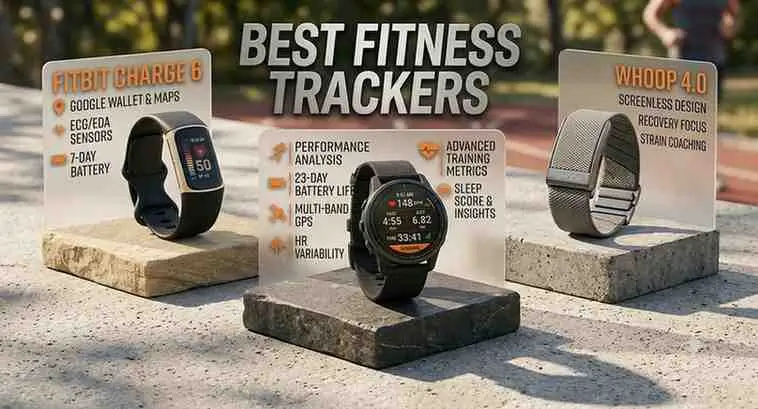
Choosing the best fitness tracker means matching the device to your goals, lifestyle, and budget rather than chasing the most expensive model. Modern trackers go far beyond simple step counting. They monitor heart rate, sleep quality, recovery, stress, and often provide guided workouts or GPS route data.
This guide explains what fitness trackers actually do, which features matter most, how the leading options differ, and how to pick one that you will actually wear and use. Whether you are a beginner building daily habits or an experienced athlete refining training load, the right tracker delivers useful data without unnecessary complexity or ongoing costs that do not fit your needs.
What Is a Fitness Tracker?
A fitness tracker is a wearable device,usually a wristband, watch-style unit, or ring,that continuously or periodically measures physical activity and physiological signals. Basic models count steps, estimate distance and calories, and track sleep duration. More advanced versions add continuous heart rate, blood oxygen (SpO2), heart rate variability (HRV), skin temperature, GPS for outdoor activities, and recovery or readiness scores.
These devices sit between simple pedometers and full smartwatches. Some prioritize all-day comfort and long battery life with minimal screens. Others blend fitness metrics with notifications, payments, and apps. None replace medical-grade equipment, but many provide reliable trends that help users understand patterns in activity, rest, and overall wellness.
How Does a Fitness Tracker Work?
Most fitness trackers rely on a combination of sensors and algorithms. An accelerometer detects motion to count steps and classify activity types. Optical heart rate sensors use photoplethysmography (PPG),shining light into the skin and measuring blood flow changes,to estimate beats per minute. GPS chips (built-in or phone-assisted) record location and pace for runs or rides. Additional sensors may measure blood oxygen, skin temperature, or electrical activity for features such as ECG on supported models.
Raw data is processed on the device or in a companion app. Algorithms convert the signals into steps, active minutes, sleep stages, stress scores, and training readiness. Accuracy depends on fit, skin tone, motion intensity, and sensor quality. Wrist-based optical sensors generally perform well for steady-state activities but can struggle during high-intensity intervals or strength training with heavy arm movement. Chest straps remain the gold standard for heart rate precision when absolute accuracy matters.
Key Features of the Best Fitness Trackers
The strongest trackers balance several core capabilities:
– Activity and step tracking , Reliable daily movement measurement with automatic workout detection.
– Heart rate monitoring , Continuous or on-demand readings plus resting heart rate trends.
– Sleep analysis , Duration, stages (light, deep, REM), and quality scores.
– GPS , Built-in multi-band or dual-frequency for accurate outdoor distance and maps without carrying a phone.
– Battery life , From roughly one day on feature-heavy smartwatches to 7–21+ days on dedicated trackers or rings.
– Water resistance , Typically 5 ATM (50 meters) for swimming.
– Recovery and readiness metrics , HRV-based insights that help prevent overtraining.
– Comfort and form factor , Slim bands, lightweight watches, or discreet rings that users keep on overnight.
– App ecosystem and insights , Clear dashboards, coaching suggestions, and data export options.
Secondary features such as contactless payments, music controls, or smartphone notifications add convenience for some users but drain battery and increase complexity for others.
Benefits of Using a Fitness Tracker
A well-chosen fitness tracker turns vague intentions into measurable habits. Daily step or active-minute goals create gentle accountability. Heart rate zones help structure cardio sessions more effectively. Sleep scores highlight the impact of late nights or stress. Over weeks and months, trend data reveals progress that a single workout cannot show.
Many users report increased motivation simply from seeing consistent feedback. Recovery metrics can reduce injury risk by encouraging rest days when readiness is low. For beginners, automatic tracking removes the friction of logging every walk or gym session. Athletes gain structured training load and VO2 max estimates that support long-term planning. Shared family or group challenges on some platforms add social reinforcement.
Limitations and Disadvantages
Fitness trackers are imperfect. Optical heart rate can lag or drift during intense intervals, HIIT, or activities with irregular arm movement. Sleep staging is an estimate, not a clinical sleep study. Calorie burn numbers are approximations influenced by individual factors the device cannot fully know.
Battery life varies widely; feature-rich smartwatches often need daily charging while dedicated trackers last longer. Some brands lock advanced insights behind subscriptions. Data privacy requires attention because health metrics are sensitive. Device abandonment is common,users stop wearing trackers that feel uncomfortable, deliver overwhelming notifications, or provide insights they never act on. Finally, no consumer wearable diagnoses medical conditions; abnormal readings should prompt professional consultation rather than self-diagnosis.
Best Fitness Trackers by Category
| Category | Best For | Key Feature |
| 🏆 Best Overall | Everyday fitness | Balanced health and activity tracking |
| 💰 Best Budget Fitness Tracker | Beginners | Affordable essential tracking |
| 🏃 Best for Running | Runners | GPS, pace, distance, and workout data |
| ❤️ Best for Health Tracking | Health-focused users | Heart rate and wellness insights |
| 😴 Best for Sleep Tracking | Sleep-focused users | Sleep stages and recovery data |
| 🏋️ Best for Workouts | Gym users | Exercise and workout tracking |
| 🔋 Best Battery Life | Frequent travelers | Long-lasting battery |
| 📱 Best Smart Features | Everyday smart use | Notifications and connected features |
| 🏊 Best for Swimming | Swimmers | Water resistance and swim tracking |
| 👩 Best Fitness Tracker for Women | Women | Fitness and wellness features |
| 👨 Best Fitness Tracker for Men | Men | Activity and performance tracking |
| 🎯 Best for Beginners | First-time users | Simple setup and easy-to-use features |
No single device ranks as the universal best fitness tracker. The right choice depends on priorities.
Best overall for most people
Slim, accurate, long-battery trackers such as recent Fitbit Charge or Inspire models and comparable Google Fitbit options deliver solid step, heart rate, sleep, and GPS performance at accessible prices. They suit daily wear without demanding constant charging or deep technical knowledge.
Best for serious training and multi-sport
Garmin devices (Vivoactive, Forerunner, and higher-end Fenix lines) excel in GPS accuracy, training metrics, recovery tools, and multi-day battery life. They reward users who want detailed performance data and coaching features.
Best for iPhone users who want smart features
Apple Watch models (Series, SE, or Ultra variants) combine strong workout tracking, health sensors, and seamless ecosystem integration. Battery life remains shorter than dedicated fitness devices, so daily charging is typical.
Best discreet / screen-free options
Oura Rings and Whoop bands focus on continuous passive monitoring of recovery, sleep, and strain. They appeal to users who dislike screens or notifications on the wrist. Both generally require ongoing subscriptions for full feature access.
Strong budget contenders
Amazfit, Xiaomi, and similar brands offer capable AMOLED displays, multi-day battery, and core health metrics at lower price points. Accuracy and long-term software support can vary more than premium brands.
When comparing, weigh built-in GPS versus phone-dependent tracking, subscription requirements, comfort for 24/7 wear, and whether you prefer a traditional watch face or a minimal band.
How to Choose and Set Up the Right Tracker
Start with your primary goal: general activity motivation, running or cycling training, sleep improvement, or recovery management. Match form factor to lifestyle,rings for discretion, bands for all-day comfort, watches for glanceable data and smart features. Check compatibility with your phone (iOS or Android). Prioritize battery life if you dislike frequent charging. Read current independent accuracy tests for heart rate and GPS, as performance changes with new generations.
Setup is usually straightforward: charge the device, download the companion app, create an account, pair via Bluetooth, enter basic personal data (age, weight, height), and grant necessary permissions. Wear the tracker snugly but comfortably, especially for heart rate accuracy. Enable automatic activity detection and review the first week of data to confirm sensors are working as expected. Update firmware promptly for accuracy and security improvements.
Security and Privacy Considerations
Fitness trackers collect intimate biometric and location data. Reputable brands encrypt data in transit and at rest and offer privacy dashboards or granular sharing controls. Review permissions carefully,disable unnecessary data sharing with third parties. Prefer companies with clear policies and a history of responsible handling. Avoid unknown ultra-cheap devices that may lack proper security practices. Enable two-factor authentication on the associated account and keep the companion app updated. Remember that consumer wearables are not covered by the same medical privacy rules as clinical devices in many jurisdictions.
Cost and Pricing Factors
Entry-level trackers often start under $100. Solid mid-range options typically fall in the $100–300 range. Premium multi-sport watches and smart rings can exceed $400–700 or more. Subscription models (common with certain recovery-focused bands and rings) add monthly or annual fees for full analytics and coaching. Factor in potential replacement bands, charging accessories, and the cost of any required premium memberships. Prices fluctuate with sales and new releases; verify current figures on official or major retailer sites before purchasing. Higher price does not automatically equal better accuracy for basic daily tracking.
Who Should Use a Fitness Tracker?
Anyone seeking objective feedback on movement, sleep, or training load can benefit. Beginners gain structure and motivation. Intermediate exercisers improve consistency and recovery awareness. Athletes refine intensity and volume management. People managing stress or sleep habits often find passive monitoring valuable. The ideal user is willing to wear the device regularly and act on the insights rather than collect data for its own sake.
Who Should Avoid or Consider Alternatives?
People who find constant metrics anxiety-inducing may prefer simpler tools or none at all. Those unwilling to charge a device or manage an app will abandon most trackers. Users needing clinical-grade measurements should consult healthcare providers for medical devices. Budget-conscious buyers who only want step counting can start with basic free phone apps before investing in hardware. If privacy concerns outweigh benefits, offline or minimal-data options exist but remain limited.
Common Problems and Solutions
Inaccurate heart rate during workouts often improves with a snugger fit or switching to a chest strap for key sessions. Short battery life can be extended by disabling always-on displays, reducing notification frequency, or choosing a longer-lasting model. Skin irritation is usually solved by cleaning the band regularly, alternating wrists, or switching materials. Syncing issues typically resolve with Bluetooth resets, app updates, or re-pairing. Overwhelming data is managed by focusing on two or three key metrics rather than every available score.
Tips and Best Practices
Wear the tracker consistently, including overnight for complete sleep data. Combine device insights with how you actually feel. Use readiness or recovery scores as guides, not absolute rules. Pair GPS trackers with accurate map data for outdoor routes. Export or back up long-term data periodically. Reassess your device every year or two,sensor technology and software improve steadily. Set realistic goals and celebrate trends rather than single-day perfection.
Frequently Asked Questions
What is the best fitness tracker overall in 2026?
There is no universal winner. Fitbit-style bands and similar mid-range options suit most everyday users. Garmin leads for serious training data. Apple Watch is strongest for iPhone owners who want smartwatch features alongside fitness tracking.
How accurate are fitness trackers?
Step counting and steady-state heart rate are generally reliable. High-intensity or strength sessions show more variability. Sleep staging and calorie estimates are useful trends but not precise measurements.
Do I need a subscription?
Many core tracking features work without one. Advanced coaching, deeper analytics, or certain recovery platforms require paid plans. Evaluate whether the extra insights justify the ongoing cost.
Are fitness trackers waterproof?
Most modern models are water-resistant to 5 ATM and suitable for swimming. Check the specific rating and avoid hot tubs or high-pressure water that can exceed the design limits.
Can a fitness tracker replace a medical device?
No. They provide wellness trends and should never be used for diagnosis or treatment decisions without professional medical advice.
Is a smart ring better than a wrist tracker?
Rings excel at continuous passive monitoring and comfort for some users, especially for sleep and recovery. Wrist devices usually offer better GPS, displays, and workout controls.
Conclusion
The best fitness tracker is the one you will wear consistently and whose data you will actually use. Focus on accuracy for your main activities, comfortable form factor, sufficient battery life, and an app experience that feels helpful rather than overwhelming. Beginners often do well with straightforward, long-battery bands. Athletes benefit from advanced GPS and training metrics. iPhone users frequently prefer the Apple ecosystem, while those seeking minimal distraction may choose screen-free rings or bands.
Review current independent tests for the latest sensor performance, confirm pricing and any subscription requirements, and start with clear goals. A thoughtful choice turns raw numbers into lasting improvements in movement, recovery, and awareness of your own habits.

Shahid Imran is the founder of InfoPrimeX, where he writes about AI tools, technology, gadgets, apps, travel, and digital trends. His mission is to provide practical, easy-to-understand information that helps readers learn smarter, explore better, and stay ahead.
Website: infoprimex.com