The iPhone 13 Pro Max launched back in September 2021, but it’s still one of the most searched-for iPhones on the used and refurbished market in 2026. That’s not nostalgia — it’s math. With Apple’s newest phones costing well over $1,000, a lot of buyers are asking whether this older Pro model still holds up. It does, in several important ways, and it also has some real gaps you should know about before buying.
This guide breaks down what the iPhone 13 Pro Max actually offers today: its hardware, camera, battery life, software support timeline, and current market pricing. Whether you’re upgrading from an older phone, buying a backup device, or just comparing options before a purchase, you’ll have what you need to decide.
What Is the iPhone 13 Pro Max?
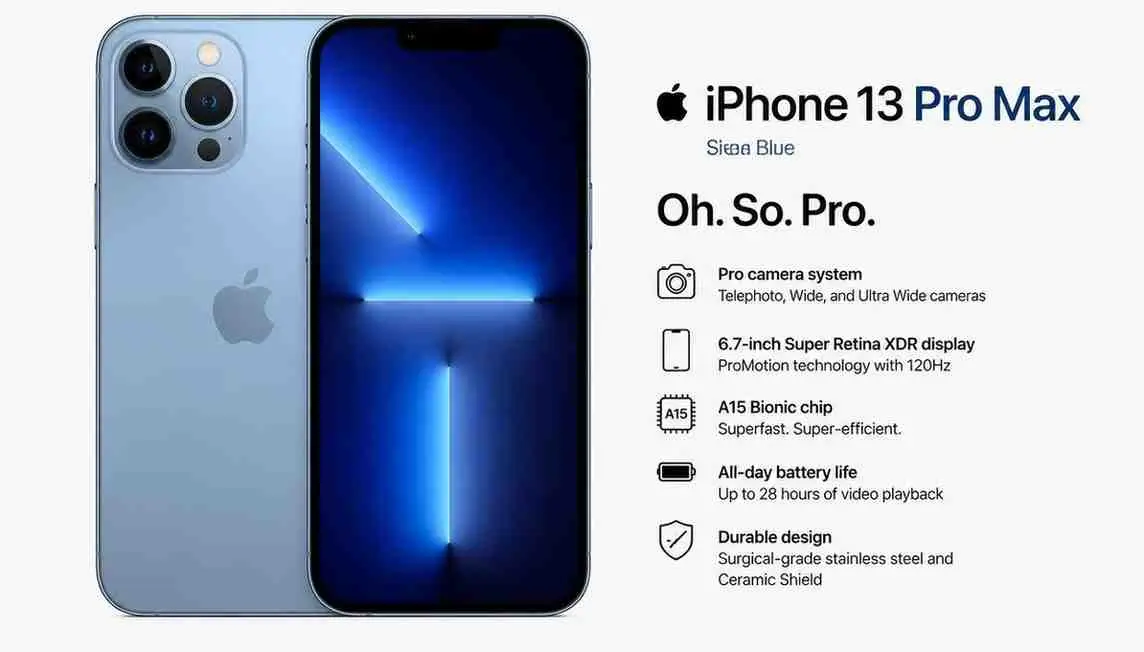
The iPhone 13 Pro Max is Apple’s large-screen flagship phone from the iPhone 13 lineup, announced in September 2021 alongside the standard iPhone 13, iPhone 13 mini, and iPhone 13 Pro. It sits at the top of that generation’s lineup, built around a 6.7-inch display, a triple-lens camera system, and Apple’s A15 Bionic chip.
Apple stopped selling the iPhone 13 Pro Max directly through its own store in late 2022, once newer models replaced it in the official lineup. Today, it exists almost entirely as a refurbished or secondhand device, sold through retailers like Back Market and Swappa, or through carrier trade-in and resale channels.
Key Specs and Features
Here’s what’s inside the iPhone 13 Pro Max, based on Apple’s official technical specifications:
- Display: 6.7-inch Super Retina XDR OLED with ProMotion (adaptive refresh up to 120Hz), up to 1,200 nits peak brightness
- Chip: Apple A15 Bionic with a 6-core CPU, 5-core GPU, and 16-core Neural Engine
- RAM: 6GB
- Storage options: 128GB, 256GB, 512GB, or 1TB
- Cameras: Triple 12MP system (wide, ultra-wide, telephoto) plus a LiDAR scanner
- Battery: 4,352 mAh, rated for up to 22 hours of video playback
- Build: Stainless steel frame with Ceramic Shield front glass, IP68 water and dust resistance
- Charging: Lightning port, MagSafe and Qi wireless charging support
For a phone released in 2021, this is still a genuinely capable spec sheet. The 120Hz display and stainless steel build in particular were considered premium-tier features at launch and remain pleasant to use today.
Camera System Explained
The triple-camera setup is one of the strongest arguments for this phone. It pairs a 12MP wide lens with a 12MP ultra-wide and a 12MP telephoto lens offering roughly 3x optical zoom. The LiDAR scanner improves autofocus speed in low light and enables more accurate depth mapping for portrait mode and augmented reality apps.
In everyday use, this means:
- Reliable low-light photography thanks to sensor-shift stabilization on the main lens
- Sharper portrait shots with more accurate edge detection around hair and complex shapes
- Video recorded in Dolby Vision HDR, plus Cinematic mode for shallow depth-of-field video
The camera system doesn’t match Apple’s newest phones on computational photography features or sensor size, but for photos and video shared on social media or used for everyday memories, it remains genuinely good.
Battery Life and Charging
The 4,352 mAh battery was one of the largest Apple had shipped at the time, and it still holds up well against many current mid-range phones. Real-world use typically delivers a full day of moderate use, and often close to two days for lighter users, especially once ProMotion’s adaptive refresh rate is left on to save power during static screens.
Charging is where the phone shows its age. It still uses Apple’s Lightning connector rather than USB-C, which the newer iPhone lineup has since adopted. Wired charging tops out around 20W, and MagSafe wireless charging is capped at 15W — both noticeably slower than what’s available on current flagship phones.
Software Support: Is It Still Updated?
This is one of the most important practical questions for anyone buying an older iPhone, and the answer is reassuring. The iPhone 13 Pro Max shipped with iOS 15 and has continued to receive major iOS updates for several years since. As of 2026, it remains on Apple’s supported device list for current iOS versions, meaning it still gets both new features and security patches.
Apple has historically supported iPhones with software updates for around 6 to 7 years from release, which puts the iPhone 13 Pro Max’s realistic support window into the later part of this decade. That’s a meaningful advantage over cheaper Android alternatives in the same price range, many of which receive far shorter update commitments.
Benefits of the iPhone 13 Pro Max Today
- Strong value relative to price. As prices have dropped on the secondhand market, the ratio of features to cost has become very favorable.
- Large, high-quality display. The 120Hz ProMotion OLED screen is still noticeably smoother and sharper than budget and mid-range phones released in 2026.
- Durable build. The stainless steel frame and Ceramic Shield front hold up well to daily wear.
- Long remaining software life. Continued iOS updates mean the phone isn’t a dead end.
- Solid battery endurance. The battery capacity and efficient A15 chip combine for above-average battery life even years after release.
Limitations and Disadvantages
No phone is perfect, and the iPhone 13 Pro Max has some clear drawbacks worth weighing honestly:
- No Always-On Display, a feature Apple introduced starting with the iPhone 14 Pro line
- Lightning port instead of USB-C, meaning a different cable than most newer devices
- Battery degradation risk on used units. Battery health should always be checked before buying secondhand
- Slower charging speeds compared to current-generation iPhones
- No Dynamic Island, the interactive notch-replacement feature found on newer Pro models
- Fewer AI-driven camera and software features compared to Apple’s latest releases
None of these are dealbreakers on their own, but together they explain why this is a budget-conscious choice rather than a cutting-edge one.
iPhone 13 Pro Max vs Newer Models
| Feature | iPhone 13 Pro Max | iPhone 14 Pro Max | iPhone 15 Pro Max |
| Chip | A15 Bionic | A16 Bionic | A17 Pro |
| Display feature | ProMotion, no Always-On | ProMotion + Always-On, Dynamic Island | Same as 14 Pro Max, titanium frame |
| Charging port | Lightning | Lightning | USB-C |
| Typical used price (2026) | ~$289–$627 | ~$399+ | Higher, less depreciated |
| Camera zoom | 3x optical telephoto | 3x optical telephoto | Up to 5x optical telephoto |
The jump from the 13 Pro Max to the 14 Pro Max mainly adds the Always-On display and Dynamic Island. The jump to the 15 Pro Max adds USB-C charging, a titanium frame, and a longer optical zoom — improvements that matter more to some buyers than others.
Where to Buy and What to Pay in 2026
Since Apple no longer sells the iPhone 13 Pro Max new, pricing now comes from refurbished and secondhand marketplaces. <cite index=”6-1″>As of August 2026, Back Market lists iPhone 13 Pro Max prices starting around $399</cite>, with the final price depending on storage, color, condition, and carrier compatibility. <cite index=”8-1″>Swappa’s listings from July 2026 show prices starting near $289</cite> for lower-condition or lower-storage units.
General pricing patterns to expect:
- 128GB, fair/good condition: roughly $290–$400
- 256GB, good/excellent condition: roughly $400–$550
- 512GB or 1TB, excellent condition: typically above $550
Prices shift regularly based on inventory and demand, so treat these as general ranges rather than fixed figures, and always check current listings before buying.
Security and Privacy
The iPhone 13 Pro Max supports Face ID, hardware-level encryption, and Apple’s standard privacy protections such as App Tracking Transparency. Because it’s still receiving iOS updates, it continues to get security patches for newly discovered vulnerabilities, which is one of the strongest reasons to avoid buying older iPhones that have already lost software support.
When buying secondhand, always confirm the device isn’t reported lost or stolen, and make sure it’s fully signed out of the previous owner’s Apple ID and iCloud account before activation.
Who Should Buy the iPhone 13 Pro Max?
This phone is a strong fit for:
- Buyers who want a large, high-quality display without paying flagship prices
- Students and budget-conscious professionals who need reliability over novelty
- People upgrading from an iPhone 11 or older who want a noticeable jump in speed and camera quality
- Anyone comfortable buying refurbished electronics from a reputable seller
Who Should Consider Alternatives?
- Buyers who specifically need USB-C charging for accessory compatibility
- Photography enthusiasts who want longer optical zoom or the latest computational photography features
- Anyone planning to keep a phone for 5+ more years, where a newer model offers a longer remaining support window
- Buyers uncomfortable with the uncertainty of secondhand battery health
Common Problems and Solutions
- Battery drains faster than expected: Check battery health in Settings > Battery > Battery Health & Charging. Below 80% health may justify a battery replacement.
- Slow charging speeds: Use a genuine or MFi-certified 20W+ USB-C to Lightning cable and adapter for faster wired charging.
- Storage fills up quickly: Consider iCloud storage plans or offload unused apps rather than assuming you need a higher storage tier.
- Carrier compatibility issues: Confirm the specific model number is unlocked and compatible with your carrier before purchasing.
Tips and Best Practices
- Always verify battery health before buying a used unit — aim for 85% or higher.
- Buy from sellers offering at least a 90-day to 1-year warranty.
- Confirm the device is unlocked if you plan to switch carriers.
- Back up and check iCloud/Find My status is disabled by the previous owner before activation.
- Compare listings across at least two marketplaces before settling on a price.
Frequently Asked Questions
What is the iPhone 13 Pro Max?
It’s Apple’s large-screen Pro iPhone from the 2021 lineup, featuring a 6.7-inch ProMotion display, A15 Bionic chip, and a triple-camera system with LiDAR.
Is the iPhone 13 Pro Max still supported by Apple?
Yes. It continues to receive iOS updates and security patches as of 2026, and is expected to remain supported for at least a few more years based on Apple’s typical update lifecycle.
Is the iPhone 13 Pro Max worth buying in 2026?
For budget-conscious buyers who prioritize display quality, camera performance, and battery life over the newest features, it remains a reasonable choice — particularly at current refurbished prices.
How much does the iPhone 13 Pro Max cost now?
Refurbished pricing generally ranges from roughly $290 to $627 depending on storage and condition, based on current marketplace listings.
Does the iPhone 13 Pro Max support USB-C?
No. It uses Apple’s Lightning connector, not USB-C.
What’s the difference between the iPhone 13 Pro Max and iPhone 13 Pro?
The Pro Max has a larger 6.7-inch display and bigger battery compared to the 6.1-inch iPhone 13 Pro; other core specs are largely the same.
Can I still get AppleCare+ for a refurbished iPhone 13 Pro Max?
No. AppleCare+ is only available at original purchase or within 60 days of activation, so refurbished units generally don’t qualify.
Is the iPhone 13 Pro Max a good camera phone in 2026?
Yes, for most everyday and social media use. It won’t match the zoom range or computational photography of Apple’s newest phones, but the triple-camera system with LiDAR remains capable.
iPhone 13 Pro Max Price in USA
- Original launch price: $1,099 for the 128GB model.
- Used/refurbished: roughly $300–$500, depending on storage, condition, battery health, and whether it is unlocked. Current listings show examples around $375–$485.
- 256GB refurbished: commonly around $400–$550 in current market guides.
iPhone 13 Pro Max Used Unlocked Price in USA
- Tip: When buying used, check battery health, Face ID, True Tone, IMEI/carrier status, screen condition, and whether Activation Lock is disabled.
Conclusion
The iPhone 13 Pro Max isn’t a cutting-edge phone anymore, but it doesn’t need to be. It offers a large Promotion display, a genuinely capable camera system, strong battery life, and continued software support — all at a fraction of its original price. The trade-offs are real: no Always-On display, an aging Lightning port, and the general uncertainty that comes with buying secondhand hardware. For buyers who want proven performance without paying flagship prices, and who take the time to verify battery health and seller reliability, the iPhone 13 Pro Max remains a sensible choice in 2026.

Shahid Imran is the founder of InfoPrimeX, where he writes about AI tools, technology, gadgets, apps, travel, and digital trends. His mission is to provide practical, easy-to-understand information that helps readers learn smarter, explore better, and stay ahead.
Website: infoprimex.com