Choosing the right hair cutting style for female is about more than picking a beautiful photo from a salon menu. The same haircut can look completely different depending on hair texture, thickness, length, face shape, and how much time you want to spend styling it.
Some women prefer a short, polished cut that takes little effort in the morning. Others want long layers, soft bangs, or a textured style that keeps plenty of movement. Your lifestyle matters just as much as the trend.
25 Hair Cutting Styles for Female
1. Classic Bob
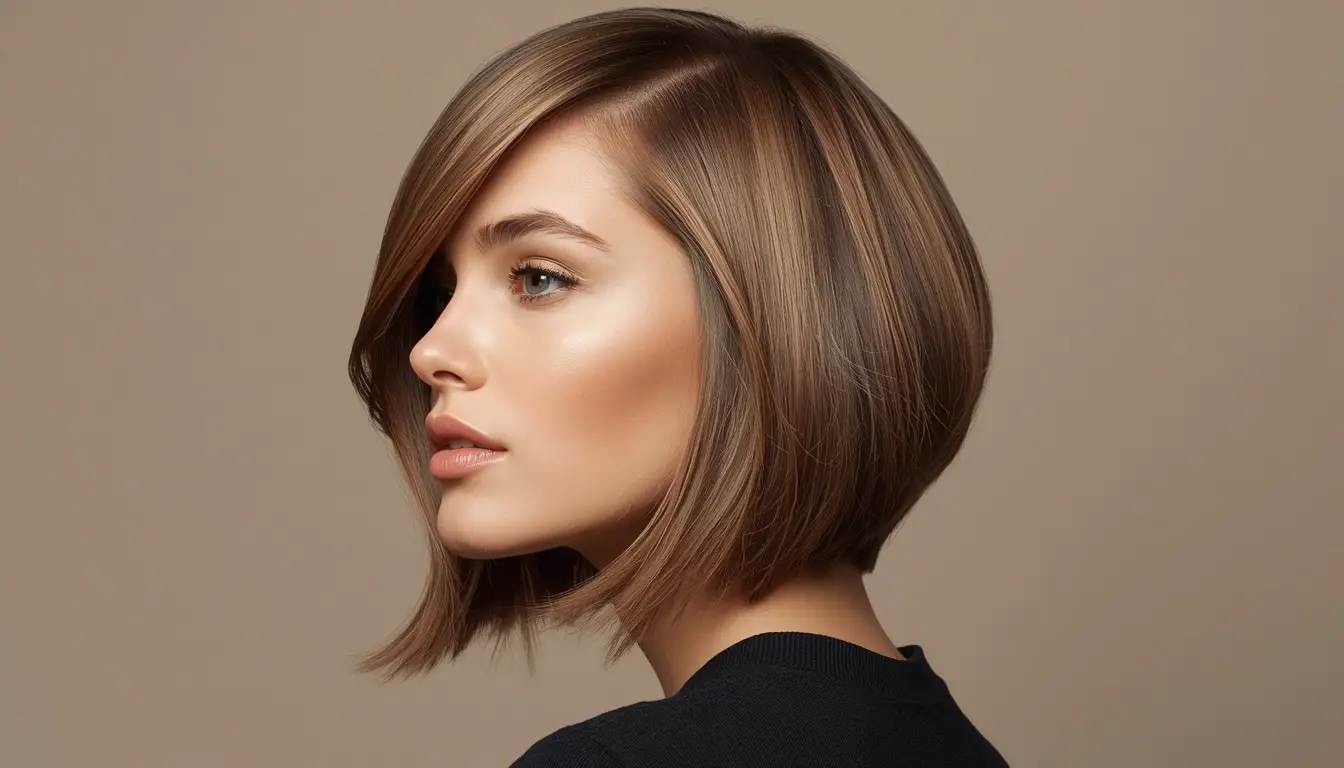
The classic bob is one of the easiest styles to recognize. It usually falls around the jawline or somewhere between the chin and shoulders.
A clean bob can create a polished appearance without requiring a complicated styling routine. It can work especially well for women who want to remove length while keeping a structured shape.
A straight bob creates a sleek appearance, while subtle texture can make it feel softer and more casual.
2. Long Bob or Lob
The lob is a longer version of the bob. It commonly falls around the shoulders or slightly above them.
This cut gives you more styling flexibility than a very short bob. You can wear it straight, wavy, tucked behind the ears, or pulled into some simple hairstyles.
The lob can be a practical choice for someone who wants shorter hair without going very short.
3. Layered Haircut
Layers remove some of the weight from the hair and create movement.
A layered haircut can be customized according to hair length and density. Long layers can keep most of the length while adding shape, while shorter layers can create more visible movement around the face.
The key is to match the amount of layering with your natural hair texture.
4. Face-Framing Layers
Face-framing layers are designed to create shape around the front of the hair.
They can start around the cheekbones, jawline, or another point that complements the overall haircut.
This style can work with short, medium, and long hair. It’s also useful when you want some shaping around your face without heavily layering the entire head.
5. Curtain Bangs
Curtain bangs usually part near the center and sweep outward toward the sides.
They create a softer frame around the forehead and can blend naturally into longer layers.
One advantage is that curtain bangs can offer the appearance of bangs without creating an extremely blunt line across the forehead.
However, they still require some styling to maintain their shape.
6. Blunt Cut
A blunt haircut has a strong, relatively even-looking perimeter rather than heavily graduated ends.
This style can give the hair a clean and modern appearance. On fine hair, a blunt edge may also create the visual impression of fuller ends.
The final result depends on hair density and texture, so a stylist should adjust the shape accordingly.
7. Pixie Cut
The pixie is a short haircut with considerably less length than a bob.
It can be customized in many ways. Some versions are sleek and close to the head, while others leave more length on top for texture and styling.
A pixie can save time when washing and drying, but short hair may require frequent trims to maintain its shape.
8. Textured Pixie
A textured pixie adds movement to a traditional short cut.
Instead of creating one smooth shape, the stylist uses varying lengths and texture to create a more relaxed appearance.
This option can suit women who like short hair but don’t want a very formal or uniform finish.
9. Shag Haircut
A shag haircut uses layers and texture to create a deliberately relaxed shape.
It can provide movement throughout the hair rather than concentrating all the shape at the ends.
A modern shag can be adapted to different lengths. It may work particularly well for naturally wavy or textured hair, although straight hair can also be styled into the look.
10. Wolf Cut
The wolf cut combines elements of heavily layered styles with a more defined shape around the top and sides.
It creates noticeable texture and movement and can give long or medium hair a more dramatic appearance.
Because the cut relies on layers, the amount of texture should match your hair density and styling preference.
11. Butterfly Cut
The butterfly cut uses multiple layers to create movement while preserving substantial length.
It often includes shorter layers around the face and longer layers underneath.
This can be useful for someone who wants a layered appearance but doesn’t want to sacrifice the overall length of their hair.
12. Long Layered Haircut
Long layers can refresh long hair without creating a major change in length.
They can add movement and help prevent very long hair from appearing like one solid block.
For women who love long hair but want more shape, this can be a practical middle ground.
13. Shoulder-Length Haircut
Shoulder-length hair offers a balance between short and long styles.
It can be worn straight, curly, wavy, or with layers. It also provides enough length for many simple hairstyles.
For women who want versatility without dealing with very long hair, shoulder length can be an appealing option.
14. Collarbone Cut
A collarbone cut sits around the collarbone area and can create a polished but relaxed appearance.
It works well as a transition between shorter and longer hair.
You can keep the ends blunt for a stronger shape or add subtle layers for more movement.
15. Chin-Length Bob
A chin-length bob creates a shorter, defined frame around the lower face.
It can look sleek with straight hair or more playful with waves and texture.
Because the length ends around the chin, the exact shape matters. Your stylist can adjust the angle and layering based on your natural hair movement.
16. Asymmetrical Bob
An asymmetrical bob has different lengths on opposite sides or a noticeably uneven shape.
This creates a more distinctive appearance than a traditional bob.
It can be subtle or dramatic depending on how much difference exists between the two sides.
17. A-Line Bob
An A-line bob generally becomes longer toward the front and shorter toward the back.
This creates a clear angle and gives the haircut a structured silhouette.
It can work especially well for women who want a bob with more shape than a standard one-length cut.
18. Side-Swept Bangs
Side-swept bangs move across the forehead toward one side.
They offer a softer alternative to a straight-across fringe and can blend into layered hair.
They also provide flexibility because they can often be moved away from the face as the hair grows.
19. Wispy Bangs
Wispy bangs are lighter and less dense than a thick blunt fringe.
They create a delicate frame without covering the forehead as heavily.
They can be combined with bobs, layered cuts, shoulder-length hair, and longer styles.
20. Textured Lob
A textured lob combines shoulder-length versatility with visible movement.
Instead of keeping the ends completely uniform, the haircut introduces texture and subtle variation.
It can look particularly relaxed when paired with natural waves.
21. U-Shaped Haircut
A U-shaped haircut creates a rounded outline at the back rather than a straight horizontal edge.
It works especially well when you want to preserve length while giving the ends a softer shape.
This can be a simple alternative to heavy layering.
22. V-Shaped Haircut
A V-shaped cut creates a point toward the center of the back.
The shape becomes more noticeable as the hair gets longer.
It can provide definition to long hair, although it may not be ideal for everyone. Hair density and the desired fullness at the ends should be considered before choosing it.
23. Feathered Haircut
Feathered layers create soft, flowing movement through the hair.
The technique can give a haircut a lighter appearance and works particularly well when you want movement rather than a sharp geometric shape.
It can be adapted to both medium and long hair.
24. Shaggy Bob
A shaggy bob combines the shorter structure of a bob with the loose texture of a shag.
It offers more movement than a traditional bob and can create a casual, less polished finish.
It may work especially well for women who like hairstyles that don’t need to look perfectly smooth.
25. Layered Haircut With Bangs
Combining layers with bangs creates multiple points of shape around the face.
The bangs can be blunt, wispy, curtain-style, or side-swept.
The best combination depends on your forehead, face shape, hair density, and styling habits.
How to Choose a Hair Cutting Style for Female
Choosing a haircut becomes easier when you consider five things: face shape, hair texture, hair density, lifestyle, and maintenance time.
Don’t choose a style only because it looks good on someone else. A haircut needs to work with your natural hair rather than constantly fight against it.
Consider Your Face Shape
Face shape can help guide the overall silhouette of a haircut.
Round face:
Longer layers, face-framing pieces, and cuts that create some vertical movement may complement the face.
Oval face:
Many different haircut shapes can work because the proportions are relatively balanced.
Square face:
Soft layers, waves, and less rigid shapes can create a softer overall effect.
Heart-shaped face:
Face-framing layers and styles that add visual balance around the lower part of the face may work well.
Long face:
Styles with width, waves, layers, or suitable bangs can help create visual balance.
These are guidelines rather than strict rules. Personal preference and natural hair texture matter too.
Best Haircuts for Thin or Fine Hair
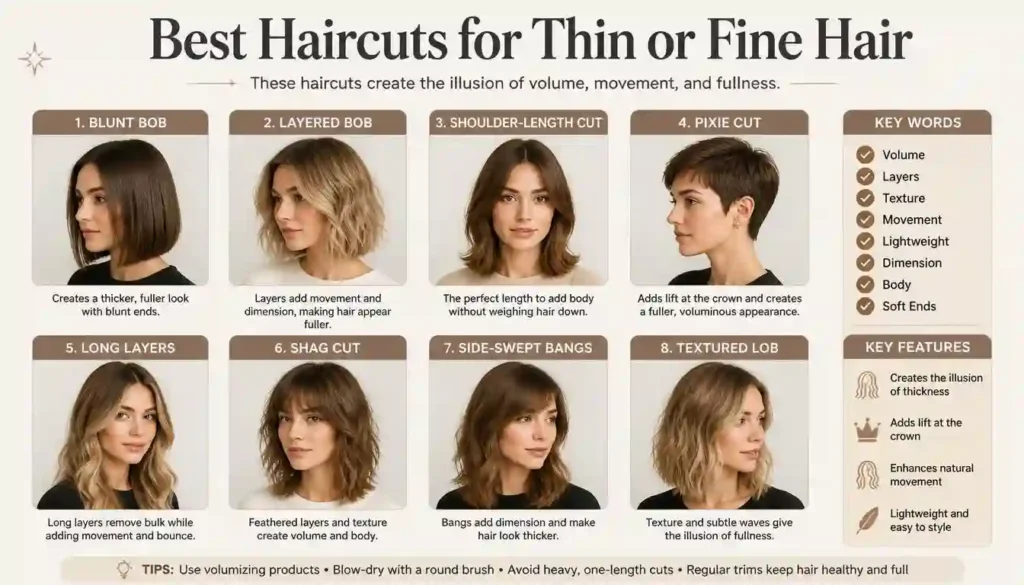
Fine hair can benefit from thoughtful shaping.
A very heavily layered haircut may remove too much visual weight. A blunt bob, lob, or carefully placed layers may create a fuller-looking outline.
Good options to discuss with a stylist include:
- Blunt bob
- Chin-length bob
- Lob
- Collarbone cut
- Light face-framing layers
- Soft bangs
The goal isn’t necessarily to add lots of layers. The goal is to create a shape that works with the amount of hair you have.
Best Haircuts for Thick Hair
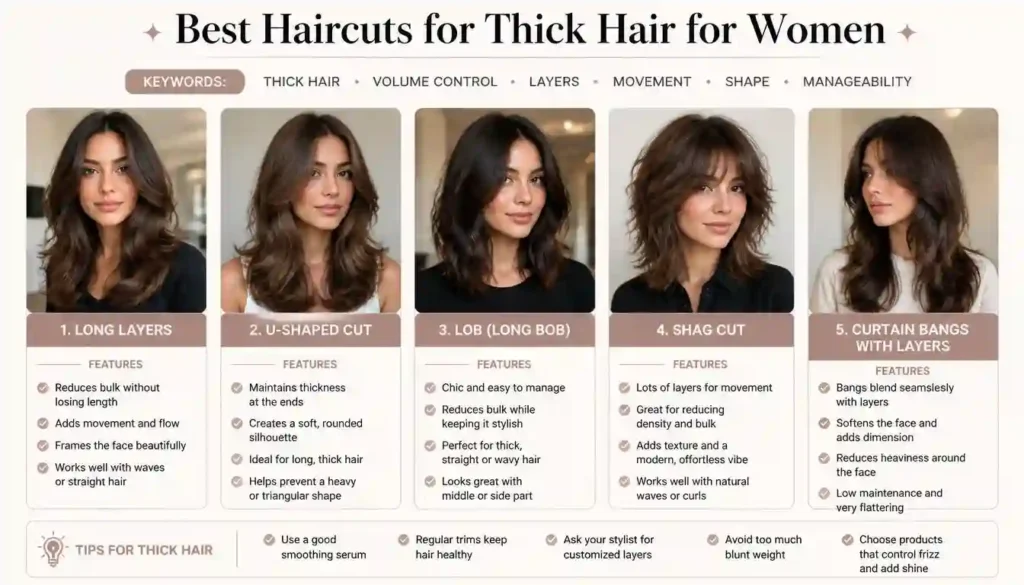
Thick hair gives you plenty of styling possibilities, but too much bulk can make some cuts difficult to manage.
Long layers, textured cuts, and carefully controlled internal layering can help distribute weight.
Possible options include:
- Long layered haircut
- Butterfly cut
- Shag
- Wolf cut
- Textured lob
- Face-framing layers
A stylist should consider how your hair behaves after washing because thick hair can expand or change shape as it dries.
Best Haircuts for Straight Hair
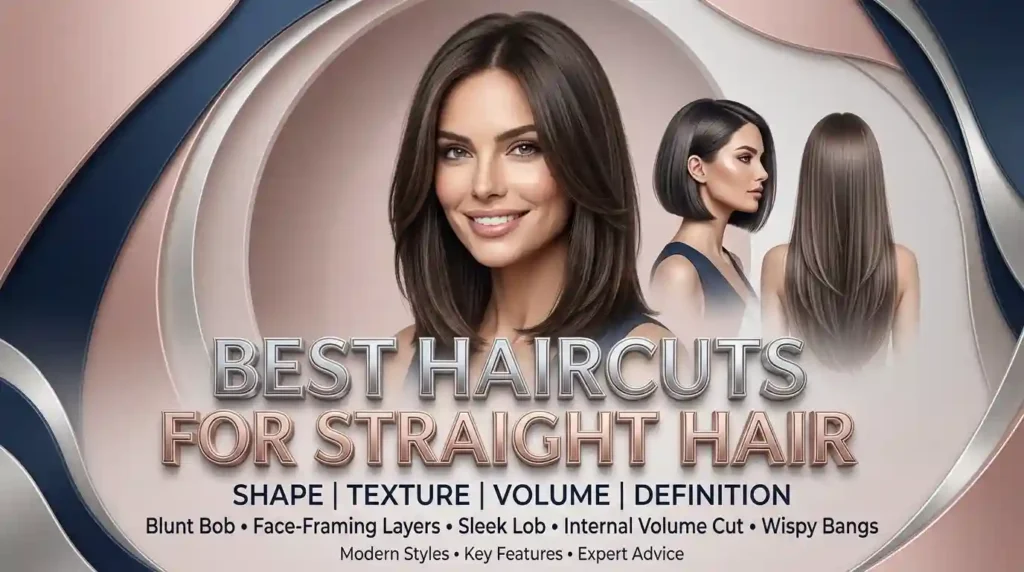
Straight hair often shows the haircut’s outline clearly.
That makes structured styles such as these worth considering:
- Blunt bob
- Lob
- A-line bob
- Long layers
- U-shaped cut
- Face-framing layers
If your hair is naturally straight, a strong perimeter can create a clean appearance without requiring extensive styling.
Best Haircuts for Wavy Hair
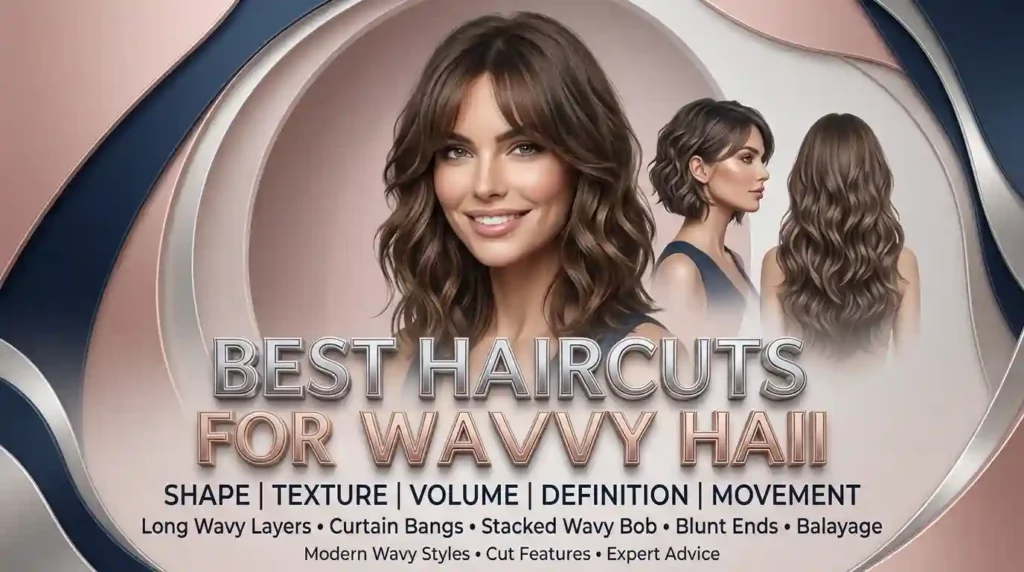
Wavy hair naturally provides movement, so haircuts that work with that movement can be easier to style.
Consider:
- Shag
- Textured lob
- Long layers
- Butterfly cut
- Face-framing layers
- Shoulder-length layers
Ask your stylist how much the hair is expected to shrink or expand when it dries naturally.
Best Haircuts for Curly Hair

Curly hair needs a haircut that accounts for curl pattern, density, and shrinkage.
Layering can help shape curly hair, but the placement of those layers matters.
Instead of copying a straight-hair haircut exactly, discuss how the shape will look when your curls are in their natural state.
A professional stylist who understands curly hair can help determine the appropriate length and layering.
Short Hair Cutting Styles for Female
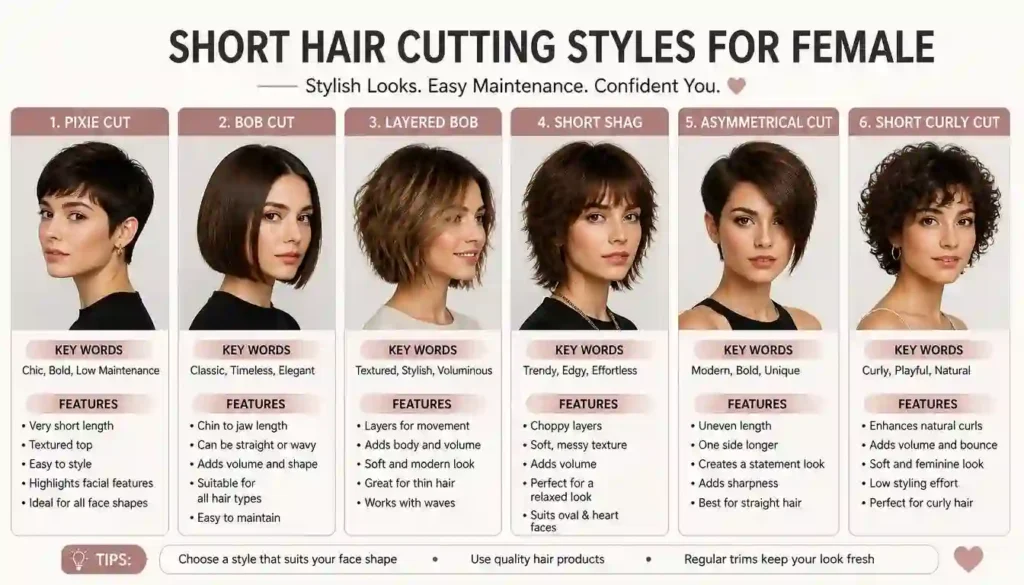
Short hair can create a noticeable change without requiring a complicated style.
Some popular choices include:
- Pixie
- Textured pixie
- Chin-length bob
- Classic bob
- Asymmetrical bob
- A-line bob
- Shaggy bob
Think about maintenance before cutting your hair short. A short style can take less time to wash and dry, but its shape may require more frequent trims.
Medium Hair Cutting Styles for Female
Medium-length hair is one of the most flexible lengths.
You can experiment with layers, bangs, waves, and different partings while retaining enough length for many hairstyles.
Popular choices include:
- Lob
- Shoulder-length cut
- Collarbone cut
- Textured lob
- Layered haircut
- Shag
- Butterfly-inspired layers
Long Hair Cutting Styles for Female
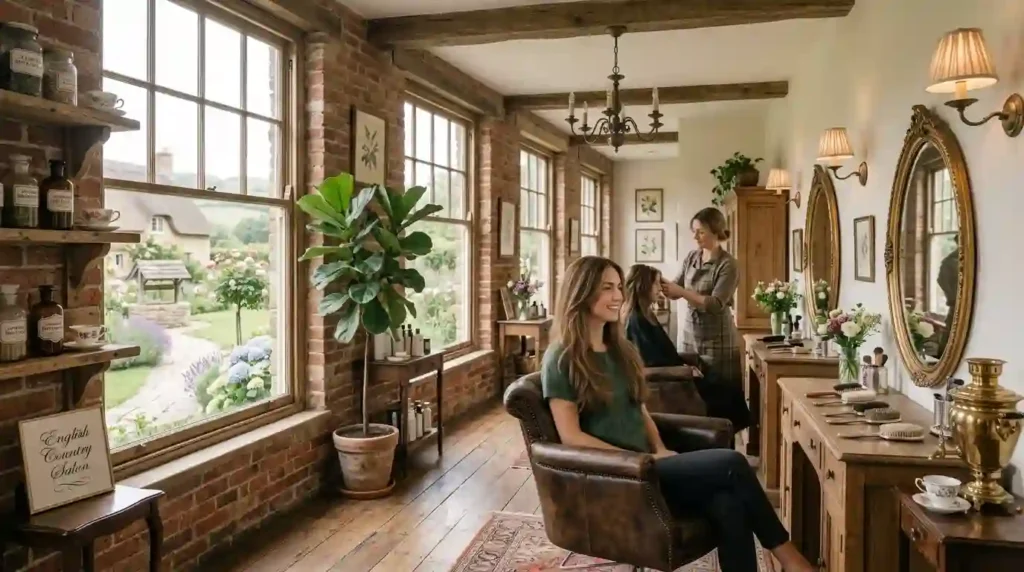
Long hair gives you plenty of room to create layers and movement.
If you want to preserve your length, consider:
- Long layers
- Butterfly cut
- U-shaped cut
- V-shaped cut
- Face-framing layers
- Feathered layers
If your ends are damaged or very thin, removing some length may create a cleaner overall shape.
Low-Maintenance Haircuts for Women
A low-maintenance haircut should fit your natural hair pattern.
If you rarely use heat tools, a haircut that depends on daily blow-drying may become frustrating.
Generally, simpler shapes and cuts that work with your natural texture can reduce styling effort.
Before choosing a haircut, ask yourself:
- How much time do I have each morning?
- Do I regularly use a blow dryer?
- Do I use a straightener or curling tool?
- How often can I visit a salon?
- Do I prefer polished or relaxed hair?
- Will I wear my hair naturally most days?
Your answers can help narrow down the choices.
How to Tell Your Stylist What You Want
A picture can help, but don’t rely on a photo alone.
Tell your stylist:
- How much length you want to keep.
- How often you normally style your hair.
- Whether you wear it natural or heat-styled.
- How much maintenance you can handle.
- What you like and dislike about your current haircut.
- Whether you want bangs.
- Whether you want layers to be subtle or noticeable.
It’s also helpful to show a photo of your hair when you wear it naturally.
Haircut Mistakes to Avoid
Choosing a Cut Only From a Photo
A hairstyle photo shows one person’s hair texture, density, styling, and proportions. Your hair may behave differently.
Use photos to communicate the general look rather than expecting an identical result.
Ignoring Natural Hair Texture
A haircut designed for straight hair may behave differently on curly or wavy hair.
Your natural texture should be part of the decision.
Adding Too Many Layers
Layers can create movement, but excessive layering may reduce fullness or make the shape harder to control.
Ask for the amount of movement you actually want.
Forgetting Maintenance
A haircut can look great immediately after a professional blowout but become difficult to manage at home.
Choose a style that fits your normal routine.
Cutting Too Much at Once
If you’re unsure about a major change, a gradual transition can make the decision easier.
For example, someone with very long hair may prefer trying a shoulder-length or collarbone cut before going significantly shorter.
How Often Should You Change Your Haircut?
You don’t need to change your haircut every time a new trend appears.
A good haircut can remain attractive as it grows if its shape works with your hair.
Instead of following every trend, consider whether the style:
- Fits your daily routine
- Works with your natural texture
- Feels comfortable
- Is easy enough to maintain
- Matches your personal style
- Gives you the length you actually want
A trend can provide inspiration, but it doesn’t have to determine your choice.
Practical Examples
For a Busy Professional
A shoulder-length lob with subtle layers can provide flexibility without requiring an elaborate styling routine.
For Someone Who Loves Long Hair
Long face-framing layers can add movement while preserving most of the overall length.
For Someone Ready for a Big Change
A pixie or chin-length bob creates a much more noticeable transformation than simply adding layers.
For Naturally Wavy Hair
A textured lob or soft shag can work with natural movement instead of requiring the hair to stay perfectly straight.
For Fine Hair
A blunt bob or carefully shaped lob can help maintain a strong-looking outline without excessive layering.
How to Choose the Right Haircut Length
Think about your lifestyle as well as your appearance.
Short hair: Great for someone who enjoys a bold change and doesn’t mind regular shape maintenance.
Medium hair: A flexible choice for people who want both shorter styling and enough length for different hairstyles.
Long hair: Suitable for someone who enjoys length and has the time or routine needed to care for it.
There is no universally correct length. The right choice is the one that works with your hair and daily life.
Haircut vs Hairstyle: What’s the Difference?
A haircut is the shape created by cutting the hair. A hairstyle is how you arrange or style that hair.
For example, a woman may have a layered haircut but wear it straight one day and wavy the next.
This distinction matters because a haircut should ideally give you a useful foundation for the hairstyles you actually wear.
Frequently Asked Questions
What is the best hair cutting style for female?
There isn’t one haircut that works best for every woman. The right choice depends on hair texture, density, face shape, desired length, styling habits, and maintenance preferences.
Which haircut is best for women with thin hair?
Blunt bobs, lobs, and carefully placed layers can work well for fine hair. Excessive layering may remove visual weight, so the final shape should match the hair’s natural density.
Which haircut is best for thick hair?
Long layers, textured cuts, shags, and carefully controlled layers can help manage thick hair while maintaining movement.
Which haircut makes hair look fuller?
A strong, well-shaped perimeter can make fine hair appear fuller. Blunt bobs and lobs are common examples, although the best option depends on the person’s hair density and texture.
Is a bob haircut suitable for women?
Yes. Bobs come in many lengths and shapes, including classic, chin-length, A-line, asymmetrical, and textured versions. The shape can be adjusted to suit individual preferences.
Are layers good for long hair?
Layers can add movement and shape to long hair while allowing you to keep substantial length. The amount and placement of layers should match your hair density and texture.
What is a low-maintenance haircut for women?
A low-maintenance haircut is usually one that works with your natural texture and doesn’t require extensive daily styling. A suitable lob, simple bob, shoulder-length cut, or natural long-layered style may fit different people.
Should women choose a haircut based on face shape?
Face shape can be useful when choosing a haircut, but it shouldn’t be the only factor. Hair texture, density, lifestyle, and personal preference also matter.
Are curtain bangs easy to maintain?
Curtain bangs can be versatile, but they still need some styling to achieve their characteristic shape. Their maintenance depends on hair texture and how the bangs are cut.
How do I choose between short and long hair?
Consider your lifestyle, styling routine, desired appearance, and willingness to maintain the cut. If you’re uncertain, a medium-length cut can provide a useful transition.
Should I show my hairstylist a picture?
Yes. A clear reference photo can help communicate the shape, length, layers, or bangs you have in mind. Also explain what you want changed because your hair may not behave exactly like the hair in the photo.
How can I make a haircut easier to maintain?
Choose a shape that works with your natural texture, avoid styles that require more daily work than you’re willing to do, and discuss maintenance with your stylist before cutting.
Conclusion
The best hair cutting style for female isn’t simply the most fashionable option. It’s the haircut that works with your natural hair, face shape, preferred length, personal style, and everyday routine.
A bob can create a clean and polished appearance, layers can add movement, a pixie can create a dramatic short look, and longer cuts can preserve versatility. Bangs and face-framing layers can also change the overall shape without requiring a complete transformation.
Before your next salon visit, think beyond the picture. Consider how your hair behaves naturally, how much time you have for styling, and how often you’re comfortable getting trims. That approach can help you choose a haircut you’ll enjoy not only on the first day, but as it grows.

Shahid Imran is the founder of InfoPrimeX, where he writes about AI tools, technology, gadgets, apps, travel, and digital trends. His mission is to provide practical, easy-to-understand information that helps readers learn smarter, explore better, and stay ahead.
Website: infoprimex.com