
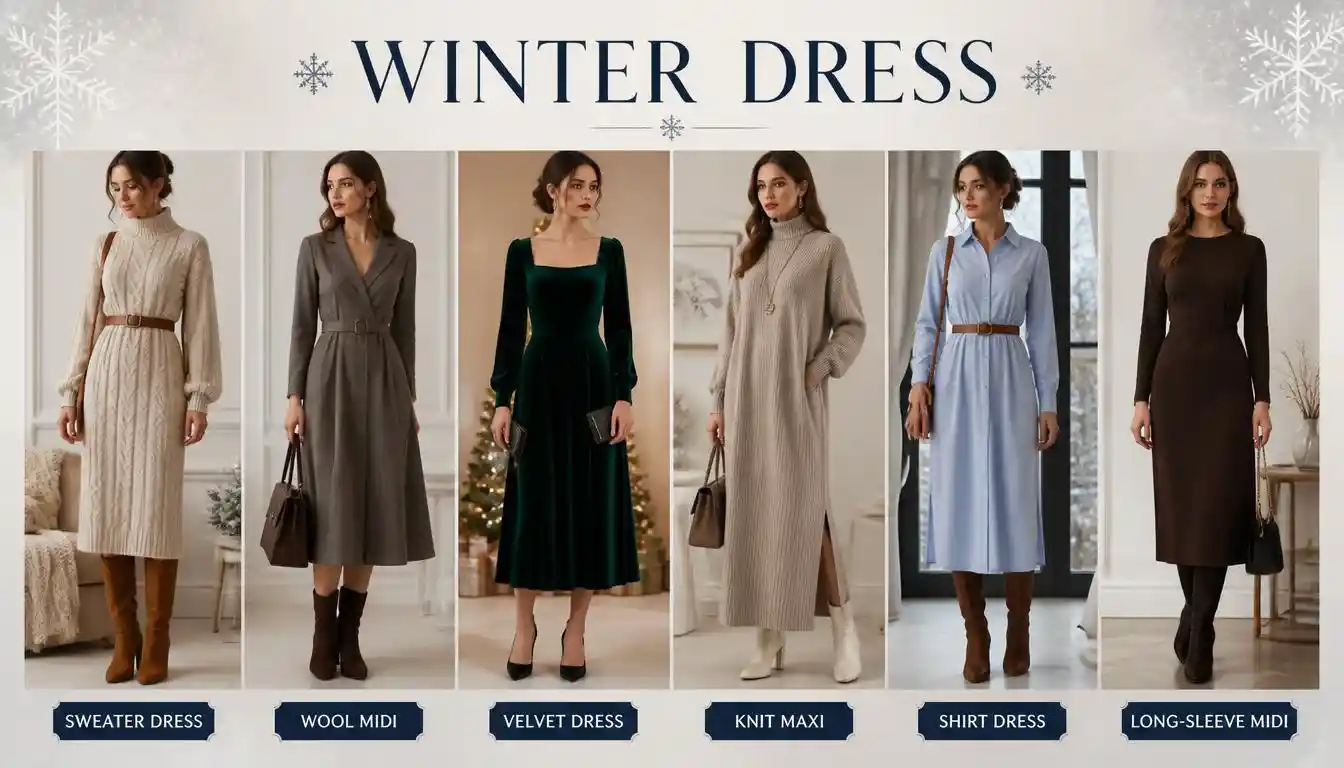
A winter dress can be one of the easiest pieces to style when temperatures drop. The right dress gives you a complete outfit base while leaving plenty of room for tights, boots, sweaters, coats, scarves, and other warm layers.
The key is choosing more than a pretty silhouette. Fabric, sleeve length, dress length, layering potential, and the weather where you live all matter. Wool, merino, knit, velvet, jersey, and other substantial fabrics can work especially well for cold-weather dressing, while lighter dresses can still work when combined with smart layers.
What Is a Winter Dress?
A winter dress is a dress designed or styled for cooler weather. It usually uses warmer or more substantial materials, offers useful coverage, or works easily with cold-weather layers.
Common characteristics include:
- Long or three-quarter sleeves
- Midi or maxi lengths
- Knit or sweater construction
- Wool or wool-blend fabrics
- Velvet and heavier textured materials
- Higher necklines
- Layer-friendly silhouettes
- Compatibility with tights and boots
However, there is no single formula.
A sleeveless dress can become winter-ready with a fitted turtleneck, tights, boots, and a warm coat. Likewise, a lighter dress can work during a mild winter when combined with appropriate layers.
Why Winter Dresses Are So Versatile
One major advantage of a dress is simplicity. Instead of building an outfit from separate trousers and tops, the dress provides the central silhouette in one piece.
A winter dress can then be adapted for different settings.
For example:
- Casual: Knit dress + ankle boots + oversized coat
- Office: Tailored midi dress + blazer + structured boots
- Weekend: Sweater dress + sneakers + puffer jacket
- Dinner: Velvet midi dress + knee-high boots + wool coat
- Formal event: Long-sleeve dress + elegant heels + tailored outerwear
Current winter styling guides also emphasize the usefulness of dresses with boots, coats, tights, and other practical layers.
Best Winter Dress Styles to Try
Sweater Dresses
A sweater dress is one of the easiest winter choices because the dress itself provides warmth and texture.
Look for:
- Ribbed knits
- Cable-knit designs
- Fine-gauge knits
- Turtleneck styles
- Relaxed silhouettes
- Belted designs
A ribbed sweater midi dress with knee-high boots and a long coat creates a polished outfit without requiring many additional pieces.
Wool Dresses
The Wool and wool-blend dresses can be excellent choices for genuinely cold conditions.
Wool provides natural insulation while remaining breathable, making it useful for both everyday and professional winter clothing.
A simple wool midi dress can be styled with opaque tights, ankle boots, and a tailored coat.
Velvet Dresses
Velvet adds depth and a dressier feel to winter outfits.
It works particularly well for:
- Holiday parties
- Winter weddings
- Evening dinners
- Formal celebrations
- Festive events
A burgundy, navy, emerald, or deep plum velvet dress can create a rich seasonal look without requiring excessive accessories.
Knit Midi Dresses
Midi dresses sit between the knee and ankle and offer excellent styling flexibility.
They work well with:
- Knee-high boots
- Ankle boots
- Long coats
- Belts
- Scarves
- Structured handbags
Midi dresses are also practical because they provide more coverage than short dresses while remaining easier to layer than some floor-length styles.
Maxi Dresses
A winter maxi dress can create a dramatic silhouette while providing substantial coverage.
For colder weather, combine it with:
- A fitted base layer
- Warm tights
- Boots
- A long coat
- A scarf
The important point is to avoid excessive fabric around every part of the outfit. A long, flowing dress often looks better when balanced with structured outerwear.
Shirt Dresses
A heavier shirt dress can transition between casual and professional settings.
Wear one with ankle boots and a belt for a defined shape, or layer it over a fine-knit top when the design allows.
Long-Sleeve Midi Dresses
For many wardrobes, a long-sleeve midi dress is a practical middle ground. It offers coverage while still working with different footwear and outerwear.
It can easily move from daytime to evening by changing the shoes, coat, and accessories.
Which Fabrics Are Best for Winter Dresses?
Fabric is one of the most important factors when choosing a winter dress.
Wool and Merino Wool
Wool is valued for warmth and breathability. Merino wool is especially useful when you want a softer, finer fabric that can be comfortable against the skin.
These fabrics are useful for:
- Everyday dresses
- Office wear
- Sweater dresses
- Cold-weather layering
Cashmere
Cashmere offers softness and warmth but generally comes at a higher price.
It is better suited to readers who prioritize luxurious texture and are prepared to follow the garment’s care instructions.
Velvet
Velvet is particularly effective for dressier winter outfits. Its texture creates visual richness and works naturally with evening styling.
Knit Fabrics
Knits are among the most practical winter-dress materials because they can combine warmth, stretch, and comfort.
Different knit weights create very different results. A fine knit can work well for layering, while a heavier knit can act as the main warm layer.
Jersey and Ponte
Jersey and ponte can be useful for everyday or office dresses because they combine comfort with a relatively structured appearance.
The exact warmth depends on the fabric weight and fiber composition, so always check the garment label rather than assuming every jersey or ponte dress is equally warm.
How to Style a Winter Dress
The simplest way to build a winter dress outfit is to think in layers.
Start With a Base Layer
A thin long-sleeve top or fitted turtleneck can add warmth without creating too much bulk.
This works particularly well underneath:
- Sleeveless dresses
- Pinafore dresses
- Slip-style dresses
- V-neck dresses
- Loose-fit dresses
Add Tights
Opaque tights are useful with mini and midi dresses when you need more coverage.
For a streamlined outfit, match tights closely with your boots or choose a simple neutral shade.
Choose the Right Boots
Boots are one of the easiest ways to make a dress feel appropriate for winter.
Try:
- Ankle boots with midi dresses
- Knee-high boots with shorter dresses
- Tall boots with sweater dresses
- Chunky boots for casual outfits
- Sleek boots for office or evening outfits
The dress-and-boots combination remains a widely used cold-weather styling formula.
Finish With Outerwear
Your coat can completely change the appearance of a winter dress.
Good options include:
- Wool coats
- Longline coats
- Tailored coats
- Puffer jackets
- Leather jackets
- Structured blazers
- Oversized coats
For a soft sweater dress, a structured coat can add definition. For a tailored dress, a relaxed coat can make the outfit feel less formal.
25 Winter Dress Outfit Ideas
1. Sweater Dress With Knee-High Boots
Choose a ribbed sweater midi dress and pair it with knee-high boots. Add a long coat for a polished cold-weather look.
2. Black Midi Dress With Ankle Boots
A black midi dress provides a simple foundation. Add a wool coat and understated jewelry for an easy everyday outfit.
3. Burgundy Velvet Dress
A burgundy velvet dress works beautifully for winter dinners, celebrations, and evening events.
4. Knit Maxi Dress With Long Coat
Balance a relaxed knit maxi dress with a structured long coat and simple boots.
5. Turtleneck Under a Sleeveless Dress
Layer a thin turtleneck underneath a sleeveless dress to create a warmer and more dimensional outfit.
6. Winter Dress With Opaque Tights
Use opaque tights with a shorter dress when you want additional leg coverage.
7. Midi Dress With Chelsea-Style Boots
A simple midi dress and ankle boots create a practical outfit for everyday winter wear.
8. Dress With Oversized Scarf
Add a large knitted scarf to a simple dress and coat combination for extra warmth and texture.
9. Neutral Sweater Dress
Try cream, camel, gray, brown, or black for a versatile dress that can work with multiple coats and boots.
10. Jewel-Tone Winter Dress
Deep green, burgundy, navy, and plum can add seasonal color without relying on loud prints.
11. Winter Dress With Belt
Add a belt to a relaxed knit dress when you want to create more definition around the waist.
12. Shirt Dress With Long Coat
A heavier shirt dress can work for smart-casual outfits when paired with boots and structured outerwear.
13. Velvet Midi With Heeled Boots
For a dressier occasion, combine a velvet midi dress with elegant boots and a tailored coat.
14. Sweater Dress With Sneakers
For a relaxed daytime outfit, wear a casual sweater dress with clean sneakers and a warm jacket.
15. Maxi Dress With Ankle Boots
A maxi dress paired with ankle boots gives you coverage while maintaining a streamlined silhouette.
16. Winter Floral Dress
A darker floral print can bring personality to winter dressing without looking overly summery.
17. Tailored Dress With Blazer
A structured midi dress underneath a blazer can work well for professional environments.
18. Knit Dress With Leather Accessories
A soft knit dress becomes sharper when paired with structured boots, a leather handbag, or a simple belt.
19. Gray Dress With Black Boots
Gray and black create an easy neutral combination that can be dressed up or down.
20. Cream Dress With Brown Boots
Cream paired with brown creates a softer winter palette and works particularly well with camel or tan outerwear.
21. Mini Dress With Tights and Tall Boots
For a short dress, tights and tall boots provide additional coverage while keeping the outfit balanced.
22. Long-Sleeve Dress With Wool Coat
This is one of the simplest combinations for work, dinner, or everyday city dressing.
23. Dress With Cardigan Layer
A cardigan can add warmth without the bulk of a heavy jacket.
24. Satin Dress With Chunky Coat
A lighter satin dress can still work in winter when contrasted with a substantial coat and appropriate footwear.
25. Simple Dress With Statement Scarf
When the dress is minimal, use a patterned or textured scarf as the main accessory.
Winter Dresses for Different Occasions
Winter Dresses for Everyday Wear
Comfort should come first.
Consider:
- Knit dresses
- Jersey dresses
- Sweater dresses
- Simple midi dresses
- Relaxed maxi dresses
Pair them with practical boots and a coat that suits your daily routine.
Winter Dresses for Work
For professional environments, structured silhouettes generally make the easiest starting point.
Try:
- Tailored midi dresses
- Wool-blend dresses
- Ponte dresses
- Long-sleeve dresses
- Simple knit dresses
A blazer or tailored wool coat can make the outfit look more polished. COS similarly recommends tailored wool dresses with blazers or structured outerwear for professional winter styling.
Winter Dresses for Parties
Winter parties allow more texture and detail.
Consider:
- Velvet
- Satin with warm layers
- Embellished dresses
- Deep colors
- Elegant long sleeves
- Statement accessories
Keep the outer layer practical if you will be outside for part of the event.
Winter Dresses for Weddings
A winter wedding dress does not have to look heavy.
Choose a fabric and silhouette suited to the dress code, then add an elegant coat, wrap, or other appropriate outer layer.
Velvet, rich colors, long sleeves, and sophisticated midi or maxi silhouettes can all work well for winter formal occasions.
How to Choose a Winter Dress for Your Climate
Not every winter feels the same.
Someone in a mild coastal climate may need a completely different dress from someone dealing with snow and freezing temperatures.
Mild Winter
You may be comfortable with:
- Medium-weight dresses
- Long sleeves
- Light coats
- Ankle boots
- Light tights
Cold Winter
Look for:
- Wool
- Merino
- Heavy knits
- Long sleeves
- Midi or maxi lengths
- Opaque tights
- Insulated outerwear
- Warm boots
Very Cold Conditions
Instead of expecting the dress alone to provide all the warmth, build a complete layering system.
A thin thermal base layer, warm tights, substantial boots, and a properly insulated coat may matter as much as the dress itself.
What Colors Work Well for Winter Dresses?
Winter fashion does not require a fixed color palette, but deeper or richer shades are often easy to style during the season.
Consider:
- Black
- Charcoal
- Navy
- Burgundy
- Forest green
- Plum
- Chocolate brown
- Camel
- Cream
- Deep red
You can also use lighter colors such as ivory, beige, soft gray, or winter white for a cleaner look.
The best color is ultimately one that works with the rest of your wardrobe and suits the occasion.
How to Choose the Right Winter Dress
Before buying or wearing a winter dress, consider five things.
1. Temperature
Think about the actual weather rather than the calendar. A mild winter day and a freezing evening require different levels of protection.
2. Fabric
Check the fiber content and fabric weight. A dress that looks thick may not necessarily provide the warmth you expect.
3. Layering
Ask whether you can comfortably add a base layer, tights, cardigan, blazer, or coat.
4. Occasion
A casual knit dress may be perfect for errands but unsuitable for a formal dinner. Choose the silhouette according to where you plan to wear it.
5. Footwear
Make sure the dress works with winter-appropriate shoes. A beautiful dress that cannot accommodate practical footwear may get less wear.
Winter Dress Mistakes to Avoid
Choosing Appearance Over Warmth
A dress may look perfect but feel uncomfortable outdoors. Always consider fabric and layering.
Wearing Too Many Bulky Layers
More layers do not always create a better outfit. Thin, fitted base layers can provide warmth without making the dress look oversized.
Ignoring the Shoes
Shoes can change the entire proportion of a dress. Consider the hemline, boot height, and overall silhouette together.
Forgetting the Coat
If you will spend significant time outside, the coat is part of the outfit. Make sure its length and shape work with the dress.
Choosing the Wrong Fabric for the Occasion
A delicate fabric may be attractive for an indoor event but less practical for a long outdoor commute.
Over-Accessorizing
Winter outfits already contain texture through knits, coats, boots, and scarves. Too many additional accessories can make the outfit feel visually crowded.
How to Stay Warm While Wearing a Dress
If warmth is your priority, use a layered approach.
A useful formula is:
Base layer → Dress → Tights → Boots → Coat → Accessories
For especially cold conditions, add thermal tights or leggings, gloves, a warm scarf, and appropriate outerwear.
COS also recommends using base layers, tights, mid-layers, and outerwear as separate parts of a winter dressing system.
The goal is not simply to add the thickest clothing possible. It is to create warmth while keeping the outfit comfortable and functional.
How to Build a Small Winter Dress Wardrobe
You do not need dozens of dresses to create multiple winter outfits.
A practical capsule could include:
- One neutral sweater dress
- One versatile midi dress
- One dressier velvet or textured dress
- One long-sleeve everyday dress
- One darker formal option
Then change the appearance with:
- Boots
- Coats
- Belts
- Scarves
- Tights
- Jewelry
- Bags
This approach gives you more outfit combinations without requiring a large wardrobe.
Frequently Asked Questions
What is the warmest type of winter dress?
Heavy knit, wool, merino, and wool-blend dresses can provide substantial warmth. The actual warmth depends on fabric weight, construction, layering, and the conditions where you will wear the dress.
Can you wear dresses in winter?
Yes. Dresses can work well in winter when the fabric, coverage, footwear, and layers are appropriate for the weather.
What should I wear over a winter dress?
Depending on the weather and occasion, you can wear a wool coat, tailored coat, puffer jacket, blazer, cardigan, or other suitable outer layer.
What shoes go best with winter dresses?
Ankle boots, knee-high boots, tall boots, and some sneakers can work with winter dresses. Choose based on the dress length, weather, and occasion.
Are sweater dresses good for winter?
Yes. Sweater dresses are particularly convenient because they combine the shape of a dress with the comfort and texture of knitwear.
Can you wear a maxi dress in winter?
Yes. A maxi dress can work well with warm layers, tights, boots, and a suitable coat.
What fabric is best for winter dresses?
Wool, merino, cashmere, velvet, and heavier knit fabrics can be good options depending on the intended use. Jersey and ponte can also work well for milder conditions or layered outfits.
Do you need tights with a winter dress?
Not always. Tights are useful when you need additional leg coverage, but the choice depends on the dress, boots, indoor temperature, and outdoor conditions.
What winter dress is best for work?
A tailored midi, structured knit dress, wool-blend dress, or ponte dress can work well for many professional settings. Always follow your workplace dress code.
What colors are best for winter dresses?
Black, navy, burgundy, forest green, plum, brown, camel, cream, and gray are versatile winter options. However, brighter colors can also work if they suit your personal style.
How do you layer a sleeveless dress in winter?
Wear a fitted long-sleeve top or turtleneck underneath, then add tights, boots, and a coat. Keep the base layer relatively thin so the outfit does not become bulky.
How do you make a summer dress work in winter?
Use a fitted base layer, tights, warm boots, and a substantial coat. The success of the combination depends on the dress fabric and how cold the weather is.
Conclusion
The best winter dress is not simply the thickest or most fashionable option. It is the one that fits your weather, lifestyle, body comfort, occasion, and existing wardrobe.
Start with the fabric and silhouette, then build the outfit with smart layers. A sweater dress can become a relaxed weekend look, a tailored midi can work for the office, and a velvet dress can transition into an elegant evening outfit.
With the right combination of dress, layers, tights, boots, coat, and accessories, you can stay comfortable while still creating a polished winter look.

Shahid Imran is the founder of InfoPrimeX, where he writes about AI tools, technology, gadgets, apps, travel, and digital trends. His mission is to provide practical, easy-to-understand information that helps readers learn smarter, explore better, and stay ahead.
Website: infoprimex.com